


















Highlights
The Question Nobody Thinks to Ask

Most of us put a lot of thought into what we eat. We read labels at the grocery store, choose organic when we can, and think twice before buying something with a long list of ingredients we cannot pronounce. Yet that same level of care is rarely considered when choosing skin care products.
Think about your morning routine. Cleanser, toner, moisturizer, sunscreen, maybe a serum or two. Have you asked yourself: what ingredients are in my skin care products?
Ayurveda, the 5,000 year old system of holistic wellness from India, has always held a simple but powerful principle: what you apply to your skin should be of the same quality as the food you eat. In Sanskrit, the word ahara (nourishment) applies equally to what enters through your mouth and what enters through your skin. That is not a poetic idea. It is a practical one, and modern science is now catching up in ways that may surprise you.
Your Skin Is Not a Wall. It Is a Gateway

Here is something the beauty industry does not advertise: your skin absorbs a significant portion of what you put on it. This is the same science behind nicotine patches and hormone creams. The skin is permeable, and many synthetic compounds in everyday beauty products do not simply sit on the surface. They enter the bloodstream.
Research has detected common skin care chemicals in blood, urine, and even breast milk. These include:
- Parabens (methylparaben, propylparaben), used as preservatives and classified as endocrine disruptors, found in breast tumor tissue
- Phthalates, used to extend fragrance, linked to reproductive and developmental concerns
- Sodium lauryl sulfate (SLS), a foaming agent that strips the skin's natural protective barrier, triggering dryness and inflammation
- Synthetic fragrances, where a single ingredient label entry can conceal dozens of undisclosed chemicals, many of which are known allergens
- Oxybenzone, found in chemical sunscreens, detected in human blood after a single application and associated with hormonal disruption
To put this in perspective: the European Union has banned or restricted over 1,300 chemicals from cosmetics. The US FDA has banned or restricted fewer than 15.
This is not alarmism. It is documented science, and it raises a straightforward question. If you would not eat it, why would you put it on your skin?
What Ayurveda Has Known All Along

Ayurveda has been asking that question for thousands of years, and the answer is built into every traditional skin care formulation.
Ayurvedic texts describe the skin as a direct extension of the digestive system. The herbs, oils, and botanicals used in Ayurveda are whole foods applied topically: sesame oil, coconut oil, turmeric, neem, rose water, chickpea flour, raw honey. These are kitchen ingredients. They are also some of the most effective and time-tested skin care substances ever documented.
Each person in Ayurveda is understood through their unique Prakriti (individual constitution), shaped by three energies:
- Vata (Air energy) tends toward dry, thin, and sensitive skin that benefits from rich, warming oils
- Pitta (Fire energy) tends toward combination or reactive skin that benefits from cooling, calming herbs
- Kapha (Water energy) tends toward oily or congested skin that benefits from invigorating and clarifying ingredients
Knowing your constitutional type takes the guesswork out of skin care entirely. You stop buying products that promise miracles and start using ingredients that are genuinely right for your skin.
The Real Cost of Conventional Beauty Products

A department store moisturizer can cost $200 and still be filled primarily with petrochemical fillers, synthetic stabilizers, and cheap silicones. Consumers pay premium prices for packaging and brand names while the actual active ingredient content is minimal.
Compare that to an Ayurvedic ubtan (a traditional herbal face mask made from ground grains, spices, and botanicals). A simple ubtan of chickpea flour, turmeric, and raw honey costs pennies to make at home. It cleanses, exfoliates, brightens, and nourishes in one step, with thousands of years of safe use and growing scientific validation behind it.
The Ayurvedic tradition demonstrates something important: the most sophisticated skin care does not require a sophisticated price tag. It requires the right ingredients.
Sensitive Skin? The Answer May Not Be on Your Bathroom Shelf

Synthetic fragrances are the single most common cause of allergic contact dermatitis. Preservative systems like methylisothiazolinone have triggered significant allergy responses and safety alerts from studies conducted in Europe. Many synthetic dyes, stabilizers, and emulsifiers are known sensitizers that cause cumulative reactions over time.
In Ayurveda, chronic skin sensitivity is not viewed as a surface issue. It is understood as an expression of internal imbalance, often rooted in impaired Agni (digestive fire) and the accumulation of Ama (metabolic waste) in the tissues.
This is why Ayurvedic skin care addresses both the skin and the root simultaneously: cooling Pitta (Fire energy) through diet, clearing Ama (metabolic waste) through herbal formulas, and calming the nervous system to reduce stress driven inflammation. Cooling herbs like Manjistha (Indian madder), Guduchi (heart leaved moonseed), and Neem work systemically to reduce the internal inflammatory load that makes skin hypersensitive in the first place.
Building Lasting Skin Health, Not Dependency

Many conventional products create dependency over time. Heavily occlusive moisturizers suppress the skin's own sebum production. Steroid based formulas thin the skin with chronic use. The skin adapts to what it receives, and when that input is synthetic and disruptive, it gradually loses its ability to self regulate.
Ayurveda captures the alternative beautifully through the concept of Ojas (the refined essence of vitality and immunity). Ayurvedic skin care is not about producing a surface effect. It is about building Ojas over time through nourishing ingredients, consistent self care, and adequate rest. The goal, as Ayurveda describes it, is skin that glows not because of what is on it, but because of the health radiating from within.
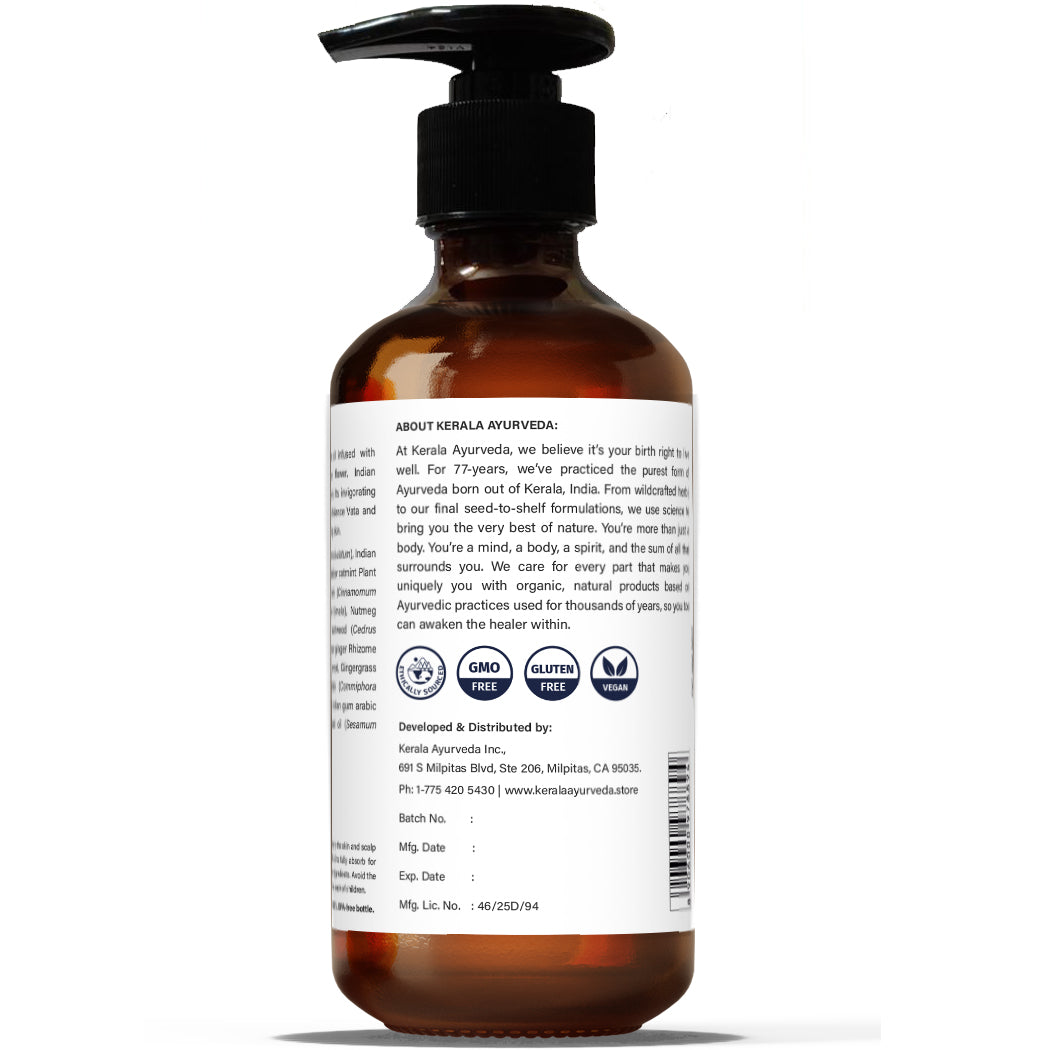
Kerala Ayurveda Dosha Body Oils: Nature in a Bottle

Understanding your skin type is a powerful first step. If you are not yet ready to make your own formulations, Kerala Ayurveda has done the work for you. Each of these three dosha specific body oils is built on the same principle as everything in this blog: purposeful, plant based ingredients that work with your skin, not against it.
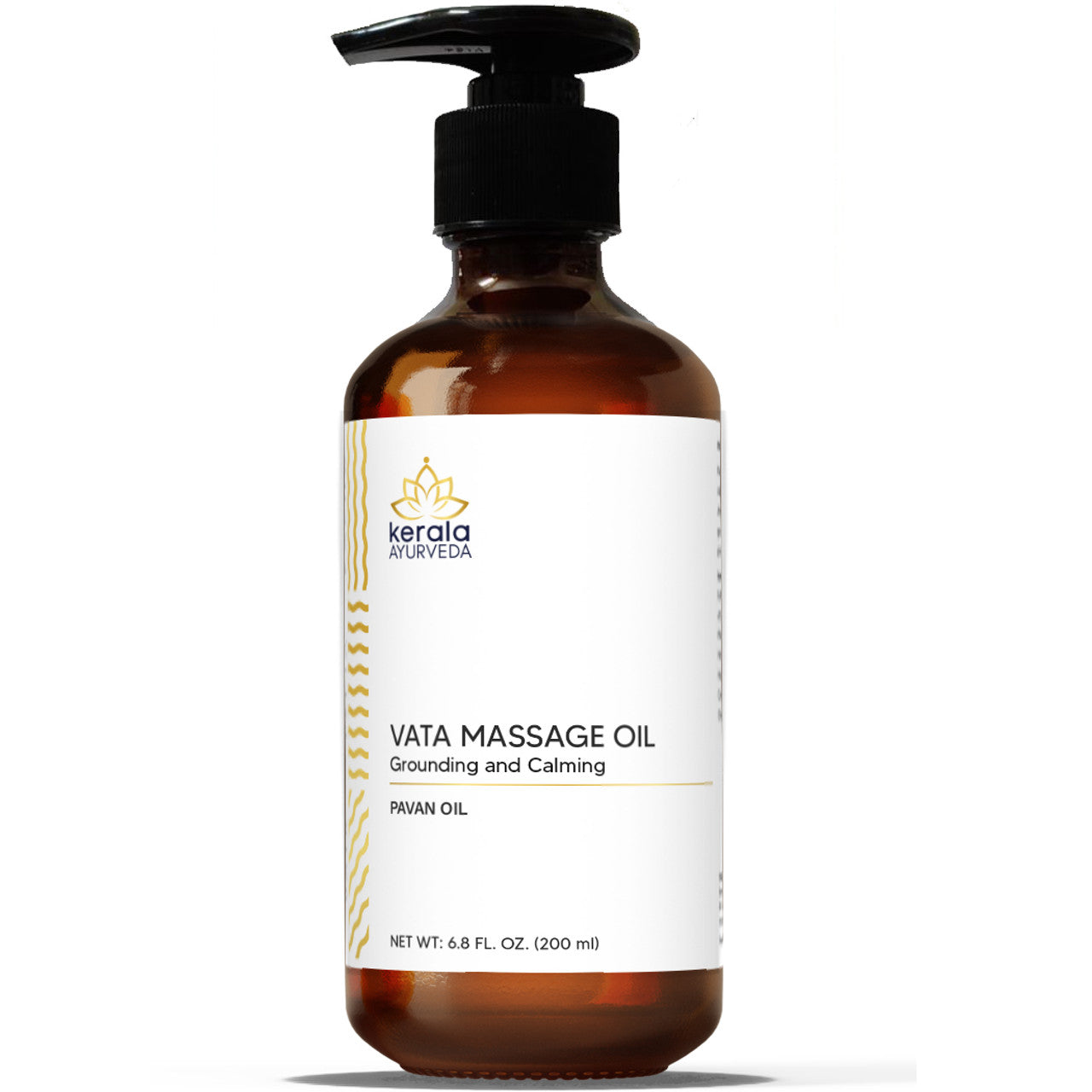
Pavan Oil | For Vata (Air Energy) Skin

Best for: Dry, thin, or sensitive skin that feels tight, rough, or reactive to seasonal changes
Pavan Oil is formulated on a warm sesame oil base, the traditional Ayurvedic choice for Vata skin, and is deeply hydrating and grounding.
Key botanicals include:
- Ashwagandha (Indian winter cherry) supports the skin's resilience to environmental stressors
- Licorice Root soothes and nourishes sensitive, reactive skin
- Arrow Leaf Sida provides gentle strengthening support to depleted skin
- Turmeric offers antioxidant and calming support to reduce surface irritation
Pavan Oil is non-comedogenic and antioxidant rich. Daily use supports deep hydration, a grounded sense of calm, and the skin's natural resistance to seasonal stressors.
Tejas Oil | For Pitta (Fire Energy) Skin

Best for: Combination, reactive, or inflamed skin prone to redness or breakouts
Pitta (Fire energy) skin runs warm. It flushes easily, reacts to heat and stress, and needs ingredients that are cool and calm. Tejas Oil delivers exactly that.
Key botanicals include:
- Indian Madder Root (Manjistha) supports skin clarity and an even, healthy tone
- Indian Frankincense (Shallaki) provides calming botanical support
- Indian Sarsaparilla (Anantamul) is a traditional Ayurvedic cooling herb for skin clarity
- Guduchi and Shatavari contribute cooling adaptogenic support for an overheated system
Regular use supports a calm, hydrated, and balanced complexion. Tejas Oil is an ideal daily Abhyanga (oil self massage) oil for anyone whose skin reacts to stress, heat, or seasonal warmth.
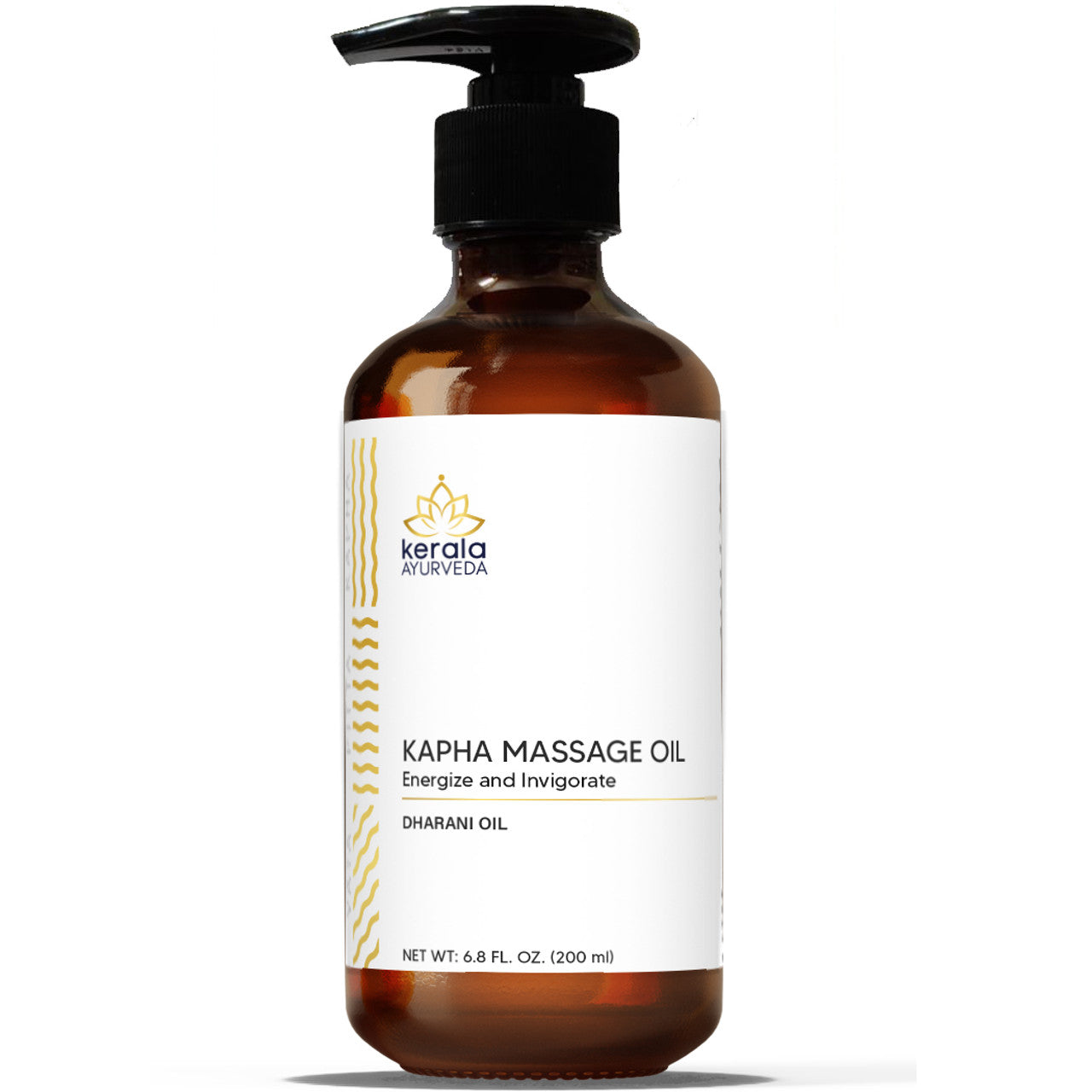
Dharani Oil | For Kapha (Water Energy) Skin

Best for: Oily, congested, or dull skin prone to enlarged pores or sluggish circulation
Kapha (Water energy) skin needs light, invigorating, and clarifying ingredients that stimulate circulation and support the skin's natural elimination of Ama (metabolic waste). Dharani Oil is a lightweight, phyto-nutrient formula that absorbs easily without heaviness.
Key botanicals include:
- Tamarind Leaf, rich in natural alpha-hydroxy acid (AHA), vitamin C, and antioxidants to exfoliate, brighten, and protect the skin
- Ginger, warming and invigorating, supporting healthy circulation and a natural glow
- Deodar Cedar, purifying and clarifying for congestion-prone skin
- Galangal Root, which awakens the senses and supports healthy blood flow
Dharani Oil is non-comedogenic and revitalizing, supporting clean pores, improved skin tone, and the elimination of Ama (metabolic waste). It is particularly well suited for the late winter and spring seasons.
At a Glance: Which Oil Is Right for You?
|
Pavan Oil |
Tejas Oil |
Dharani Oil |
|
Dosha |
Vata (Air energy) |
Pitta (Fire energy) |
Kapha (Water energy) |
|
Skin Type |
Dry, thin, sensitive |
Combination, reactive, inflamed |
Oily, congested, dull |
|
Key Herbs |
Ashwagandha, Licorice, Turmeric |
Manjistha, Shallaki, Guduchi |
Tamarind, Ginger, Deodar Cedar |
|
Skin Benefit |
Deep hydration, barrier support |
Cooling, calming, complexion clarity |
Invigorating, exfoliating, circulation support |
|
Best Season |
Fall and winter |
Summer and spring |
Late winter and spring |
|
Price |
$25.95 |
$25.95 |
$25.95 |
Want to Learn to Make Your Own?

Once you understand your skin type and the ingredients that support it, you can create your own customized skin care from scratch using whole food, organic ingredients. No synthetic fillers. No confusing labels. No guesswork.
Kerala Ayurveda Academy is offering a hands-on, two day Timeless Ayurvedic Beauty Workshop on April 25 and 26, 2026, available both in person in Milpitas, CA and via live streaming.
This workshop covers everything from head to toe:
- Face care: Dosha based skin assessment, custom facial oils, toners, moisturizers, and Kajal (traditional eyeliner)
- Hair care: Herbal oils, natural shampoos, and scalp support for hair fall, premature greying, and dandruff
- Body care: Natural exfoliation, Abhyanga (oil self massage), and seasonal skin care routines
- Foot care: Grounding foot soaks and oils that support full body wellness
You will also experience hands-on treatments including facial masks and Marma therapy (Ayurvedic energy point therapy), so you see and feel the results in real time. No prior Ayurveda knowledge is required.
Registration is $525. Certification students and alumni receive a discounted rate upon login at checkout.
Register for the Timeless Ayurvedic Beauty Workshop here.
The Bottom Line

Your skin is not a problem to be solved with the right chemical formula. It is a living reflection of your overall health, responsive to what you eat, how you rest, how you manage stress, and what you choose to apply to it.
Natural skin care addresses the surface. Ayurveda addresses the whole. Together, they offer a path to the kind of skin that does not need to be covered up or chemically managed: skin that is genuinely, lastingly well.
Start with one change. Read one label. Swap one product. Or better yet, come learn how to make your own. The path toward naturally healthy skin begins with a single curious question. And that question changes everything.

References
- "Natural vs. Chemical Skin Care: 10 Reasons to Go Natural." Kerala Ayurveda reference document. Internal editorial resource, 2024.
- Environmental Working Group. Skin Deep Cosmetics Database. https://www.ewg.org/skindeep.
- Charaka Samhita, Sutrasthana: principles of Ahara (nourishment) and Abhyanga (oil self massage).
- Ashtanga Hridayam, Sutrasthana: Dinacharya (daily routine) and skin care protocols.
Related Products