
















Highlights
Most of us choose skin care products based on what we see advertised or what a friend recommends. We try them, see some results, and move on when something stops working. It can feel like a constant guessing game. Ayurveda, a time-honored system of natural health from India, offers a refreshingly different starting point: understand your unique skin type first, and then your skin care plan becomes much clearer.
Ayurveda teaches that your skin reflects your inner health. When your body is in balance, your skin tends to glow. When something is off, the skin often shows it first. And just as importantly, Ayurveda recognizes that no two people have exactly the same skin, which means no single product or routine works for everyone.
Let’s explore what makes your skin uniquely yours through the lens of Ayurvedic skin types. We also take an honest look at what is inside most commercial skin care products and why choosing natural ingredients is not just a trend but a genuinely healthier choice for your skin and your body.
Your Ayurvedic Skin Type: What It Is and Why It Matters

Ayurveda organizes the natural world, including humans into three primary mind/body types called Doshas. They are Vata (air energy), Pitta (fire energy, Kapha (water energy). Think of your Dosha as your body's biological blueprint. The unique combination of elements you were born with shapes how you digest food, how much sleep you need, how you respond to stress, and what your skin looks and feels like.
Most people have one or two dominant Doshas. Each one gives the skin its own set of characteristics, strengths, and tendencies. Once you recognize your skin type, you can stop guessing and start choosing products and daily habits that genuinely support it.
Vata (Air Energy) Skin: Fine, Dry, and Delicate
Vata is the mind/body type associated with air and space. It governs all movement and communication in the body. People with Vata-dominant skin tend to have a naturally fine, delicate complexion that is beautiful when balanced but quick to show signs of dryness when it is not.
Characteristics of Vata skin type:
- A fine, thin texture with small pores
- Skin that feels dry or tight, especially in cooler weather
- A tendency toward flakiness or rough patches
- Fine lines that can appear earlier than expected
- Sensitivity to cold temperatures and wind
When Vata skin is in balance, it has a soft, almost translucent glow. When it is out of balance, often triggered by cold, wind, stress, or irregular routines, dryness and dullness can set in quickly.
Vata skin responds best to:
- Rich, nourishing oils like sesame or almond applied regularly
- Gentle, creamy cleansers that protect the skin's natural moisture
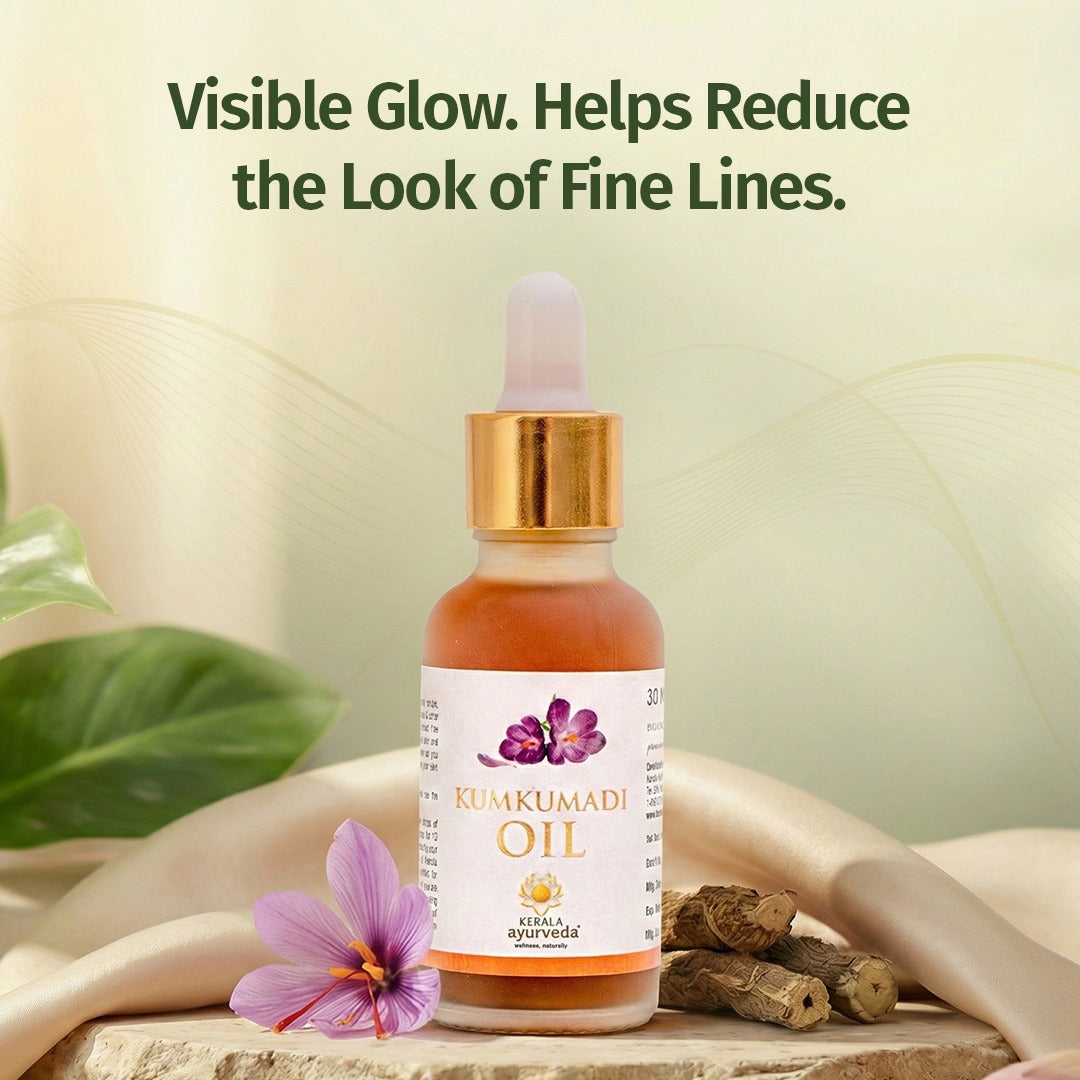
- Warming and soothing herbs, particularly Saffron, which brightens and revitalizes dull, dry skin, and Marigold (Calendula), known for its gentle ability to support delicate skin renewal
Pitta (Fire Energy) Skin: Warm, Sensitive, and Reactive
Pitta is the mind/body type associated with fire and water. It governs digestion, transformation, and intensity. People with Pitta-dominant skin often have a warm, rosy complexion that is lively and luminous when balanced but quick to react when it encounters heat, stress, or harsh ingredients.
Characteristics of Pitta skin type:
- A warm or reddish undertone to the skin
- A tendency toward flushing, redness, or blotchiness
- Breakouts or inflammation, especially during stressful periods
- Sensitivity to sunlight and high temperatures
- Skin that reacts easily to new products
When Pitta skin is balanced, it has a natural warmth and clarity that is genuinely striking. When it is out of balance, often in summer or during periods of high stress, it tends toward inflammation and redness.
Pitta skin responds best to:
- Cooling, soothing ingredients like aloe vera, cucumber, and rose water
- Gentle exfoliation using mild botanicals such as oatmeal or chickpea flour
- Herbs with a natural affinity for calming inflamed skin, particularly Neem (Indian Lilac), long valued in Ayurveda for its powerful ability to purify and soothe, and Rose Petals, which cool and calm reactive skin while leaving a subtle, natural radiance
Kapha (Water Energy) Skin: Rich, Resilient, and Oily
Kapha is the mind/body type associated with earth and water. It provides the body with structure, lubrication, and stability. People with Kapha-dominant skin tend to have the most resilient skin of the three types. It ages slowly and holds moisture beautifully, but it also needs regular stimulation to stay clear and vibrant.
Characteristics of Kapha skin type:
- Skin that tends to feel oily, particularly by midday
- Enlarged pores and a tendency toward blackheads or congestion
- A pale, smooth complexion that resists wrinkles
- A dull or lackluster tone without regular cleansing
- Breakouts that are slow and deep rather than quick and surface-level
When Kapha skin is balanced, it has a beautiful softness and natural glow. When it is out of balance, often during winter or with a rich, heavy diet, congestion and dullness build gradually.
Kapha skin responds best to:
- Deep, thorough cleansing to clear excess oil and keep pores clear
- Regular exfoliation two to three times per week to restore brightness
- Stimulating, clarifying botanicals like Neem (Indian Lilac) to purify the skin, and Triphala, a time-honored Ayurvedic blend of three fruits, Amalaki (Indian Gooseberry), Bibhitaki (Beleric Myrobalan), and Haritaki (Chebulic Myrobalan), which supports internal cleansing and helps the skin reflect a healthier inner balance
Which Skin Type Sounds Like You?

Here is a simple side-by-side view to help you identify where you fit.
|
|
Vata (Air Energy) |
Pitta (Fire Energy) |
Kapha (Water Energy) |
|
Texture |
Fine, thin, delicate |
Medium, warm-toned |
Thick, smooth, resilient |
|
Moisture |
Dry, easily dehydrated |
Combination, reactive |
Oily, well-lubricated |
|
Main Concerns |
Dryness, fine lines, flaking |
Redness, breakouts, sensitivity |
Congestion, dullness, large pores |
|
Core Approach |
Nourish, hydrate, protect |
Cool, calm, soothe |
Cleanse, stimulate, brighten |
|
Key Botanicals |
Saffron, Marigold, sesame oil |
Neem, Rose Petals, aloe vera |
Neem, Triphala, clay |
It is worth noting that your skin type can shift with the seasons, your diet, your stress levels, and the natural changes that come with age. This is completely normal in Ayurveda. It is one of the reasons why understanding your skin type is a living practice, not a one-time label.
What Is Really in Your Skin Care Products?

Knowing your skin type is a wonderful first step. The next question is just as important: what are you actually putting on your skin every day?
Most commercial skin care products contain synthetic ingredients added to extend shelf life, improve texture, or create a pleasing scent. Some of these are generally considered harmless. Others, however, have been the subject of growing concern in the wellness and research communities, and it is worth understanding why.
Ingredients Worth Knowing About
Parabens: Parabens are synthetic preservatives used in many moisturizers, cleansers, and cosmetics to prevent the growth of bacteria and extend product shelf life. You will find them listed on labels as methylparaben, propylparaben, or butylparaben.
Research published in peer-reviewed journals has identified parabens as endocrine-disrupting chemicals, meaning they have the potential to interfere with the body's natural hormonal system. Studies have found that parabens can mimic estrogen in the body, which has been linked to concerns around reproductive health and hormonal balance. Published research has also shown that switching to paraben-free products can meaningfully reduce paraben levels detected in the body in a matter of days, which suggests that consumer choices make a real difference.
Phthalates: Phthalates are chemicals used as softeners and skin penetration enhancers. They appear in many nail polishes, hair sprays, lotions, and fragrances. Like parabens, they have been identified as potential endocrine-disrupting chemicals by the National Institute of Environmental Health Sciences. Research has linked phthalate exposure to concerns around reproductive health and early development.
Synthetic Fragrances: Synthetic fragrances are among the most common triggers of skin irritation and sensitivity, particularly for those with Pitta or Vata skin. What makes them especially difficult to navigate is that in the United States, manufacturers are not required to disclose every chemical used to create a fragrance. A single product listing the word fragrance on its label may contain dozens of undisclosed compounds.
A Word About Natural Products
It would be easy to assume that anything labeled natural is automatically gentle and safe. That is not always the case, and it is worth knowing the distinction.
Some plant-based ingredients, including certain essential oils and citrus extracts, can cause skin reactions in sensitive individuals. The word natural is also not a regulated term in the United States, which means it can appear on a product label without any standardized definition or verification behind it.
What this means in practice is that the source, quality, and formulation of natural ingredients matter enormously. Well-formulated botanical products, particularly those developed within Ayurveda's long tradition of plant-based skin care, offer a genuinely thoughtful alternative to synthetic formulas. They work with the skin's natural biology rather than around it.
Why Natural Ingredients Support Long-Term Skin Wellness
When natural products are made with care and quality, the evidence for their benefits is meaningful.
- Plant-based ingredients like aloe vera, turmeric, rose, and neem are rich in antioxidants and anti-inflammatory compounds that support the skin's natural protective barrier.
- Research has found that shifting toward natural personal care products can increase the diversity of beneficial microorganisms that live on the surface of the skin. This matters because a healthy skin microbiome plays an important role in keeping the skin resilient and balanced.
- Ayurveda's approach to skin care is rooted in the idea that radiant skin begins from within. Caring for your Ojas (vitality and immunity) through nourishing food, restful sleep, and botanicals that support your specific Dosha is what creates lasting skin health rather than temporary surface results.
Synthetic Versus Natural Skin Care: A Simple Comparison

|
|
Synthetic or Chemical Ingredients |
Natural or Botanical Ingredients |
|
Main Concerns |
Potential hormone disruption and skin irritation with long-term use |
Possible sensitivity in some individuals; quality of sourcing matters |
|
Hormone Safety |
Parabens and phthalates linked to endocrine disruption |
Generally hormone safe; rare exceptions with certain essential oils |
|
Skin Microbiome |
May reduce diversity of beneficial skin microorganisms |
Supports a healthy, resilient skin microbiome |
|
Long-Term Skin Health |
Risks can increase with cumulative daily exposure over time |
Supports skin barrier strength and healthy aging |
|
Environmental Impact |
Often petroleum-derived; larger environmental footprint |
Biodegradable and sustainably sourced options widely available |
|
Best For |
Short-term targeted concerns when closely monitored |
Daily nourishment and long-term wellness for all skin types |
Simple Choices, Lasting Results

Healthy, radiant skin does not require an overwhelming routine or an expensive product collection. It starts with understanding your unique skin type and choosing ingredients that genuinely support it.
Ayurveda has been offering this kind of personalized, nature-based wisdom for thousands of years. When you know whether your skin leans toward the dryness of Vata (Air energy), the sensitivity of Pitta (Fire energy), or the richness of Kapha (Water energy), your choices become much simpler. You can move past the guesswork and toward a routine that actually works for your body.
Reading your ingredient labels is a meaningful next step. Choosing products formulated with high-quality botanical ingredients, matched to your skin type, is one of the most supportive things you can do for your skin's long-term health.

Small, consistent choices made with intention add up over time. Your skin is worth that kind of care.
Want to Learn More?
Timeless Ayurvedic BeautyA Hands-On 2-Day Workshop with Kerala Ayurveda Academy April 25 to 26, 2026 | In Person or Live Streaming | Milpitas, CA
If this blog has sparked your curiosity, you are invited to go deeper. The Timeless Ayurvedic Beauty workshop offered by Kerala Ayurveda Academy is a two-day, hands-on experience designed for beginners and wellness enthusiasts alike. No prior knowledge of Ayurveda is required.
You will learn to identify your Ayurvedic skin type, understand what your skin is revealing about your internal health, and create your own natural skin care, hair care, and body rituals using herbs and traditional Ayurvedic formulas. Participants experience treatments including facial masks, foot soaks, and Marma Therapy (Ayurvedic pressure point therapy) throughout the weekend.
Visit keralaayurveda.us/products/timeless-ayurvedic-beauty to learn more and reserve your spot. |

References
Harley KG, Kogut K, et al. Reducing Phthalate, Paraben, and Phenol Exposure from Personal Care Products in Adolescent Girls: Findings from the HERMOSA Intervention Study. Environmental Health Perspectives. 2016;124:1600-1607. https://pmc.ncbi.nlm.nih.gov/articles/PMC5047791/
National Institute of Environmental Health Sciences (NIEHS). Endocrine Disruptors. U.S. Department of Health and Human Services. https://www.niehs.nih.gov/health/topics/agents/endocrine
Environmental Working Group (EWG). What Are Parabens? https://www.ewg.org/what-are-parabens
Environmental Working Group (EWG). The Toxic Twelve Chemicals and Contaminants in Cosmetics. https://www.ewg.org/the-toxic-twelve-chemicals-and-contaminants-in-cosmetics
Dairkee SH, et al. Reduction of Daily-Use Parabens and Phthalates Reverses Accumulation of Cancer-Associated Phenotypes within Disease-Free Breast Tissue. PubMed NCBI. 2023. https://pubmed.ncbi.nlm.nih.gov/36746253/
Bledzka D, Gromadzinska J, Wasowicz W. Parabens and Their Effects on the Endocrine System. Molecular and Cellular Endocrinology. 2014. https://pubmed.ncbi.nlm.nih.gov/29596967/
Vagbhata. Ashtanga Hrdayam (Heart of Ayurveda). Sutrasthana, Chapter 1, verses 11-12. Compiled approx. 550-600 CE.
Charaka Samhita. Sutrasthana. Classical Ayurvedic reference on skin and constitutional health.
Related Products


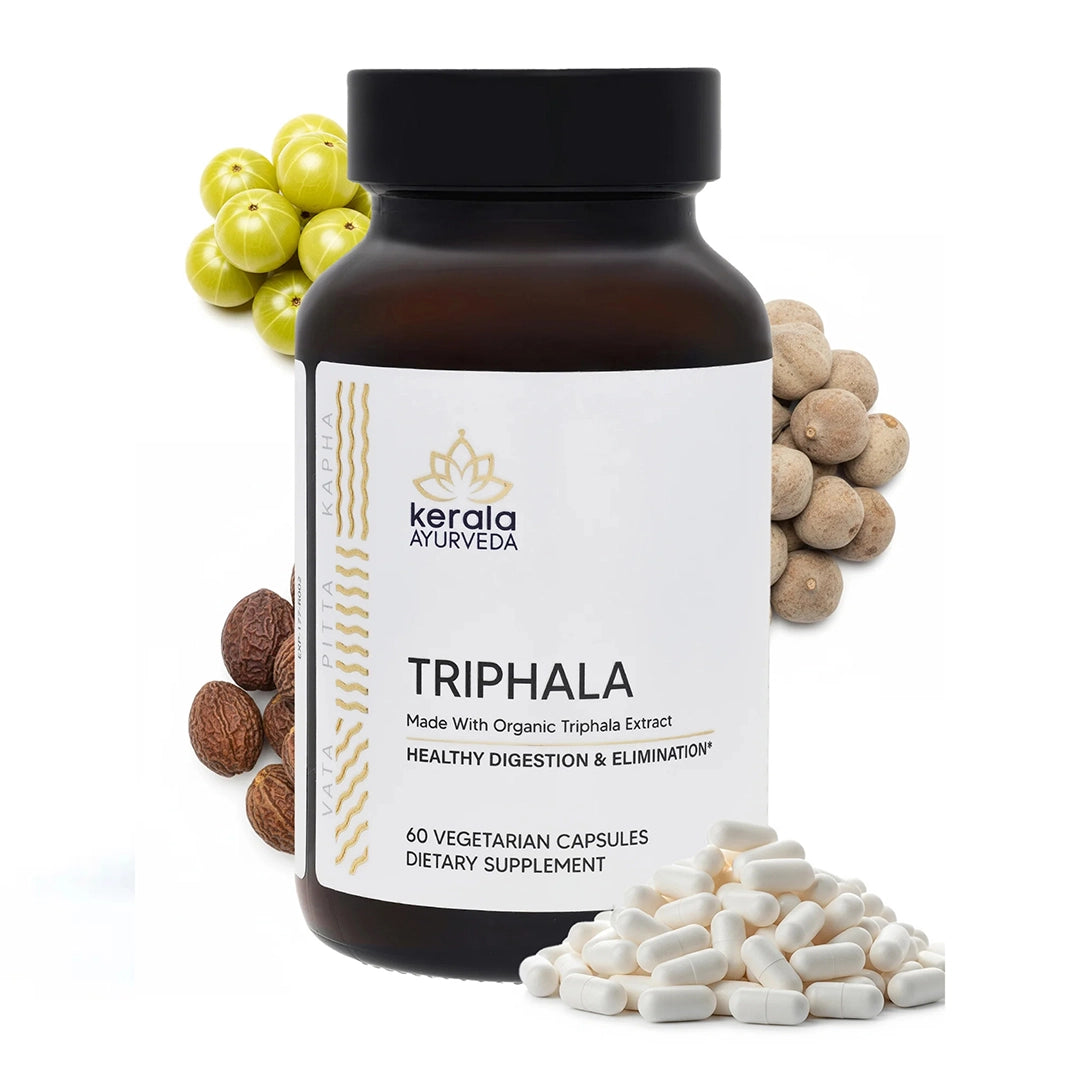

Why Choose Kerala Ayurveda's Triphala? At Kerala Ayurveda, we honor the deep tradition of Ayurveda while delivering the highest quality, sustainably sourced products. Here's why our Triphala stands out: Expertly Crafted from Ancient Wisdom: With over 75 years of experience in authentic Ayurvedic practices, our Triphala is made using the time-honored formula - Amalaki, Bibhitaki, and Haritaki - designed to balance all three