






















Highlights
How Ayurveda Identifies Your Pain Type and What You Can Do About It
If you are living with joint or muscle pain, you already know how much it can affect your daily life. What you may not know is that Ayurveda has been studying pain for thousands of years and has developed a remarkably practical way of understanding it. Not just where it hurts, but why it hurts the way it does.
According to Ayurveda, the character of your pain is not random. The way it feels, what makes it worse, what brings relief, and when it tends to flare are all meaningful clues that point to the underlying imbalance driving it. Two people can have pain in the same joint and experience it in completely different ways, because their body's constitution and root cause is different. Ayurveda has a deep understanding of the differences.
This blog will walk you through how Ayurveda identifies three distinct types of joint and muscle pain, help you recognize which one sounds most like yours, and show you how to support your body in a way that actually matches what it needs.
The Energy Behind All Pain: Understanding Vata

To understand pain with an Ayurvedic lens, it will help to understand one key concept first. In Ayurveda, the body is governed by three energies called doshas. Vata (Air energy) is the dosha responsible for all movement in the body, including circulation, joint lubrication, and the flow of nutrients through the tissues. Think of it as the body's movement and communication system.
When Vata is balanced, joints feel comfortable, muscles are supple, and movement flows easily. When Vata becomes disturbed, pain follows. In fact, the oldest Ayurvedic texts describe Vata as the root of all pain in the body, stating plainly that without disturbed Vata, pain cannot exist.
What makes this useful is that when Vata combines with the other two energies, Pitta (Fire energy) or Kapha (Water energy), the character of the pain changes to reflect that specific combination. A person whose pain has a burning, inflammatory quality is experiencing a Vata and Pitta imbalance. A person whose pain is heavy, dull, and swollen is experiencing a Vata and Kapha imbalance. The type of pain sensation itself tells the story.
Why What You Eat May Be Making Your Pain Worse

Before we look at the three pain types, there is one concept worth understanding because it connects directly to everyday life: Ama (undigested metabolic waste).
Your body depends on strong digestive fire, which Ayurveda calls Agni (digestive fire), to break food down completely and convert it into nourishment. When digestion is strong, this process works beautifully. But when digestion weakens, whether from eating foods that are too heavy, eating irregularly, overeating, or relying on processed foods, the digestive process becomes incomplete. The undigested residue that builds up in the body is what Ayurveda calls Ama.
Ama is sticky and heavy. It settles into the joints and tissues over time, blocks circulation and nutrient flow, and creates the conditions for chronic stiffness, swelling, and pain. The oldest Ayurvedic texts describe it simply: where Ama accumulates, imbalance takes root.
This is important because it means your diet is a direct contributing factor to your pain. Foods that are difficult to digest, heavy, dense, cold, or overly processed, eaten regularly over time, can build up as Ama and worsen joint and muscle pain regardless of your pain type.
Signs that Ama may be contributing to your pain:
- Morning stiffness that eases gradually once you start moving
- A coated tongue when you wake up in the morning
- A heavy or foggy feeling that accompanies your pain
- Discomfort that tends to worsen after a large or heavy meal
The Three Ayurvedic Types of Joint and Muscle Pain

Read through the three types below with your own experience in mind. Your pain type is the one that consistently matches how your pain feels, what triggers it, and what helps.
Vata (Air Energy) Pain
This is the most common type of joint and muscle pain and tends to have a sharp, unpredictable quality that many people find hard to pin down. If this type sounds like yours, you may find our guide on how to balance Vata a helpful companion read.
How to recognize it:
- Sharp, shooting, or pricking sensation
- The pain moves around: it may show up in one joint one day and another the next
- Joints may feel dry, stiff, or crackly, sometimes making an audible popping sound
- Muscle spasms and cramps are common
- Worse in cold or dry weather, with stress, with irregular eating, or after overexertion
- Relieved by warmth, gentle oil massage, rest, and nourishing food
- Tends to flare at night and in the early morning hours
Common examples: Lower back pain, neck stiffness, muscle cramps and spasms
Pitta (Fire Energy) Pain
Pitta pain has a distinctly inflammatory quality. If your pain tends to burn and visibly inflame the area, this is the type most likely to match your experience. Our guide on how to balance Pitta offers additional support for this pain type.
How to recognize it:
- Burning, hot, and intense sensation
- Stays in one place rather than moving around
- The affected area often looks red and feels warm or swollen to the touch
- Worse with heat, spicy or acidic foods, alcohol, and stress
- Relieved by rest, cooling foods, and reducing heat in the environment and diet
- Tends to be worst at midday
Common examples: Inflammatory joint conditions, hot and tender joints, flare-ups after injury, neck and shoulder pain with a burning quality
Kapha (Water Energy) Pain
Kapha pain has a heavy, congested quality that often feels like the joint or muscle is waterlogged. It is the type most commonly associated with swelling and deep tissue heaviness. For more on supporting Kapha balance, visit our guide on how to balance Kapha.
How to recognize it:
- Dull, heavy, aching sensation
- Constant and persistent rather than sharp or acute
- The area may look puffy or swollen and feel cold to the touch
- Worse in cold and damp weather, with inactivity, and after heavy meals
- Relieved by movement, warmth, and lighter food
- Worst in the morning and tends to ease throughout the day
Common examples: Joint swelling and puffiness, deep tissue soreness, stiffness that gradually improves with movement throughout the day
When It Is More Than One Type
Some people find that their pain reflects a mix of two types. Vata Pitta pain is sharp with a burning, inflammatory quality. Vata Kapha pain is stiff, heavy, and swollen. A mixed type is just as stable and specific as a single type and is most accurately identified through a personalized assessment with an Ayurvedic practitioner.
Which Type Sounds Like Yours?
|
Feature |
Vata Pain |
Pitta Pain |
Kapha Pain |
|
Sensation |
Sharp, shooting, pricking |
Burning, hot, intense |
Dull, heavy, aching |
|
Movement |
Moves around the body |
Stays in one place |
Fixed and stuck |
|
Aggravated by |
Cold, dryness, stress |
Heat, spicy food, midday |
Cold, damp, inactivity |
|
Relieved by |
Warmth, oil, rest |
Cooling, rest |
Movement, dry heat |
|
Associated signs |
Cracking joints, spasms |
Redness, heat, swelling |
Puffiness, heaviness |
|
Worst time |
Night and early morning |
Midday |
Morning |
How Kerala Ayurveda's Myaxyl Line Supports Each Pain Type
Understanding your pain type is the first step. Having the right support in place is the next one. Kerala Ayurveda's Myaxyl products bring together three complementary products that work from the outside in and the inside out, addressing joint and muscle pain at both the tissue level and the root cause.

Myaxyl Body Oil is a fast absorbing massage oil built on a sesame oil base, which Ayurveda considers the finest oil for external use because it penetrates deeply and works well for all three dosha types. The herbal blend is carefully chosen to address the full range of joint and muscle pain presentations.
Key herbs and what they do:
- Nandivriksha (Crepe Jasmine): Balances Vata and helps relieve pain; research identifies it as having analgesic properties that work directly on pain response pathways
- Devadaru (Himalayan Cedar): Reduces inflammation, clears Ama from the joints and tissues, and balances both Vata and Kapha pain types
- Rasna (Lesser Galangal): Helps relieve body aches, supports muscle recovery, and pacifies both Vata and Pitta
- Lemongrass and Eucalyptus oils: Stimulates local circulation, eases muscle tension, and provides gentle soothing support to the musculoskeletal system
How to use: Apply 2 to 4 ml to the affected area and massage in slow circular motions until absorbed. Leave on for at least one hour. Repeat two to three times daily.

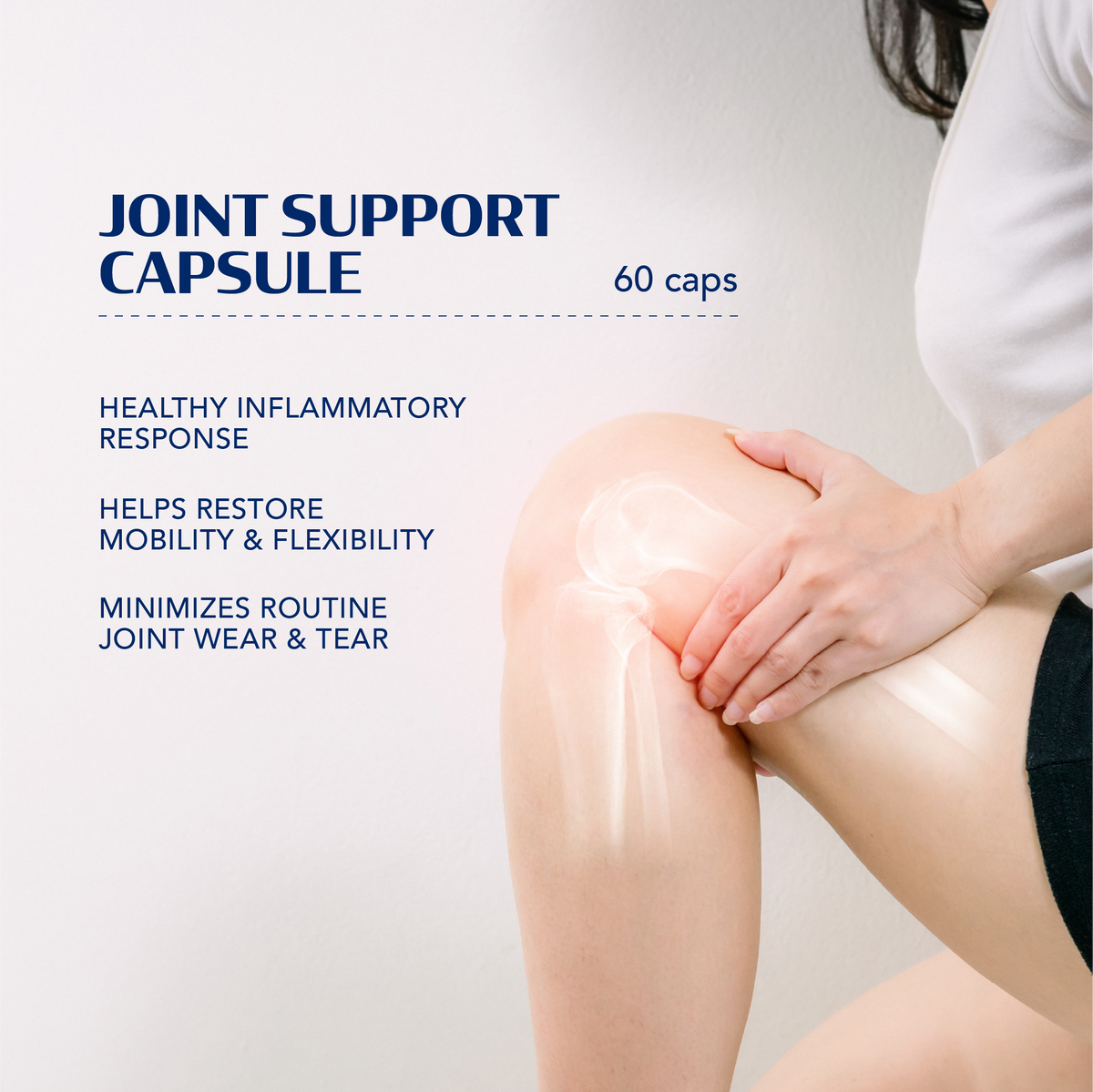
Myaxyl Joint Support Capsules work internally to support Agni (digestive fire), reduce Ama accumulation, and address the root dosha imbalance from within. This internal support complements the topical products by working on the deeper cause rather than only the surface.
Key herbs and what they do:
- Shallaki (frankincense, 200mg): Helps reduce joint inflammation; research published in the Journal of Ethnopharmacology and Arthritis Research and Therapy (2018) confirms its effects on joint pain and mobility
- Haridra (Turmeric, 70mg): Supports healthy inflammation response, improves joint mobility, and is especially helpful for Pitta type pain
- Sunthi (Ginger, 70mg): Supports digestion and Ama clearance while gently pacifying both Vata and Kapha
- Maricha (Black Pepper, 5mg): Reduces swelling, supports Kapha balance, and helps the body absorb all the other herbs more effectively
How to use: Take as directed on the label or as recommended by your Ayurvedic practitioner.

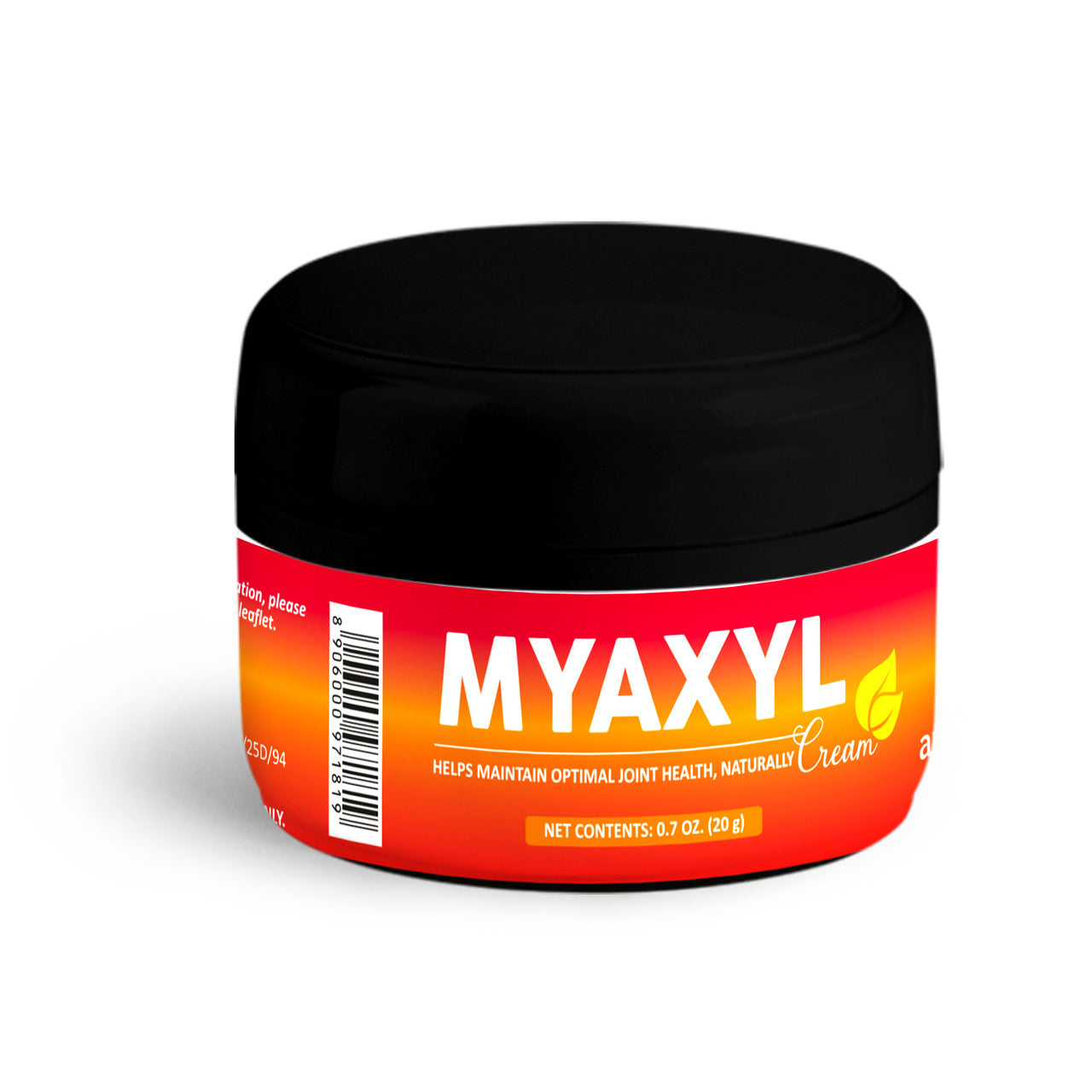
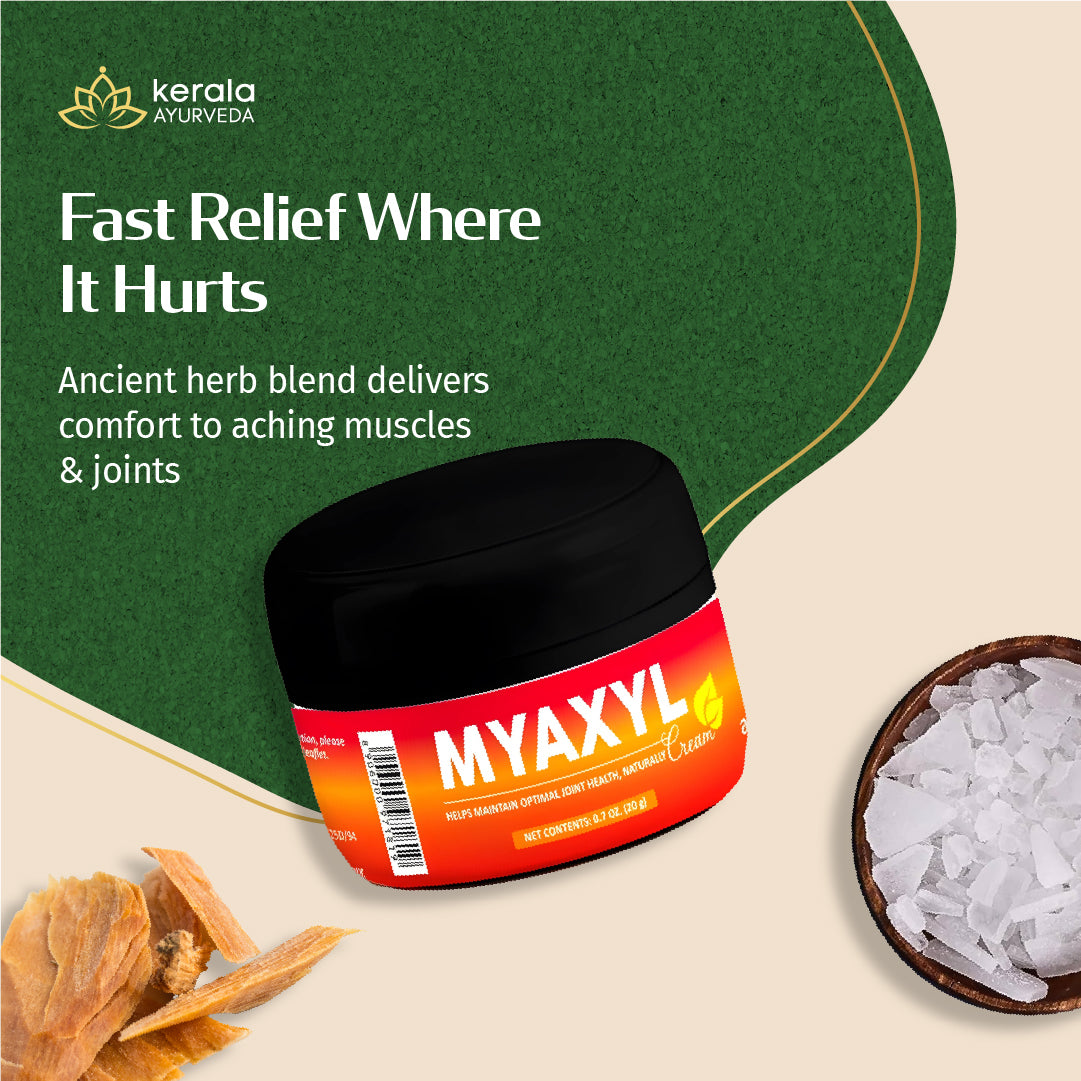
Myaxyl Cream is a light, fast absorbing topical cream designed for targeted comfort on specific areas of pain. Wintergreen and Capsicum stimulate local circulation and ease stiffness and spasms. Eucalyptus adds a gentle soothing effect. The formula specifically works to calm aggravated Vata in the affected area and is ideal for focused support on the knees, shoulders, neck, and lower back.
How to use: Apply directly to the affected area, massage gently until absorbed, and repeat as needed.
The Value of Using All Three Together
The oil and cream work on the local tissues and channels from the outside. The capsules work on Agni, Ama, and the root imbalance from within. Together they address pain at the surface and at the source, which is the foundation of how Ayurveda has always approached lasting joint and muscle support.
Simple Daily Habits for Each Pain Type

Once you have identified your pain type, these everyday habits work in the same direction as Ayurvedic support.
- Vata pain: Stay warm, keep your meals and sleep schedule consistent, practice gentle stretching, and favor warm nourishing foods with healthy fats. A daily warm oil self massage, known as Abhyanga (self massage with warm oil), is one of the most effective ways to calm Vata.
- Pitta pain: Avoid excess heat, spicy foods, and alcohol. Favor cooling and refreshing foods such as sweet fruits, cucumber, leafy greens, and coconut. Moderate your exercise, especially in warm weather.
-
Kapha pain: Keep moving even when the body feels heavy. Favor warm, lighter meals and reduce heavy, oily, or cold foods. Rising early and applying a warm compress to affected areas can make a meaningful difference.
Working With an Ayurvedic Practitioner
This blog is a helpful starting point. A qualified Ayurvedic practitioner can assess your individual constitution and confirm your specific pain type with greater precision, particularly if your experience reflects more than one type. A personalized approach will always go further than a general one. Kerala Ayurveda offers both in person and online Ayurvedic consultations through the Kerala Ayurveda Wellness Center.
Pain Is Information. Ayurveda Provides the Map.

Knowing your pain type changes the entire approach. Vata pain asks for warmth, nourishment, and oil. Pitta pain asks for cooling and the clearing of heat. Kapha pain asks for movement and the lifting of heaviness. When you understand which type is yours, you can stop guessing and start giving your body exactly what it is asking for.
Kerala Ayurveda's Myaxyl products are designed to meet you at your specific pain type and support you from the inside out, with herbs that have been trusted in Ayurvedic practice for centuries and are now supported by modern research as well.
A Note on Nerve Pain
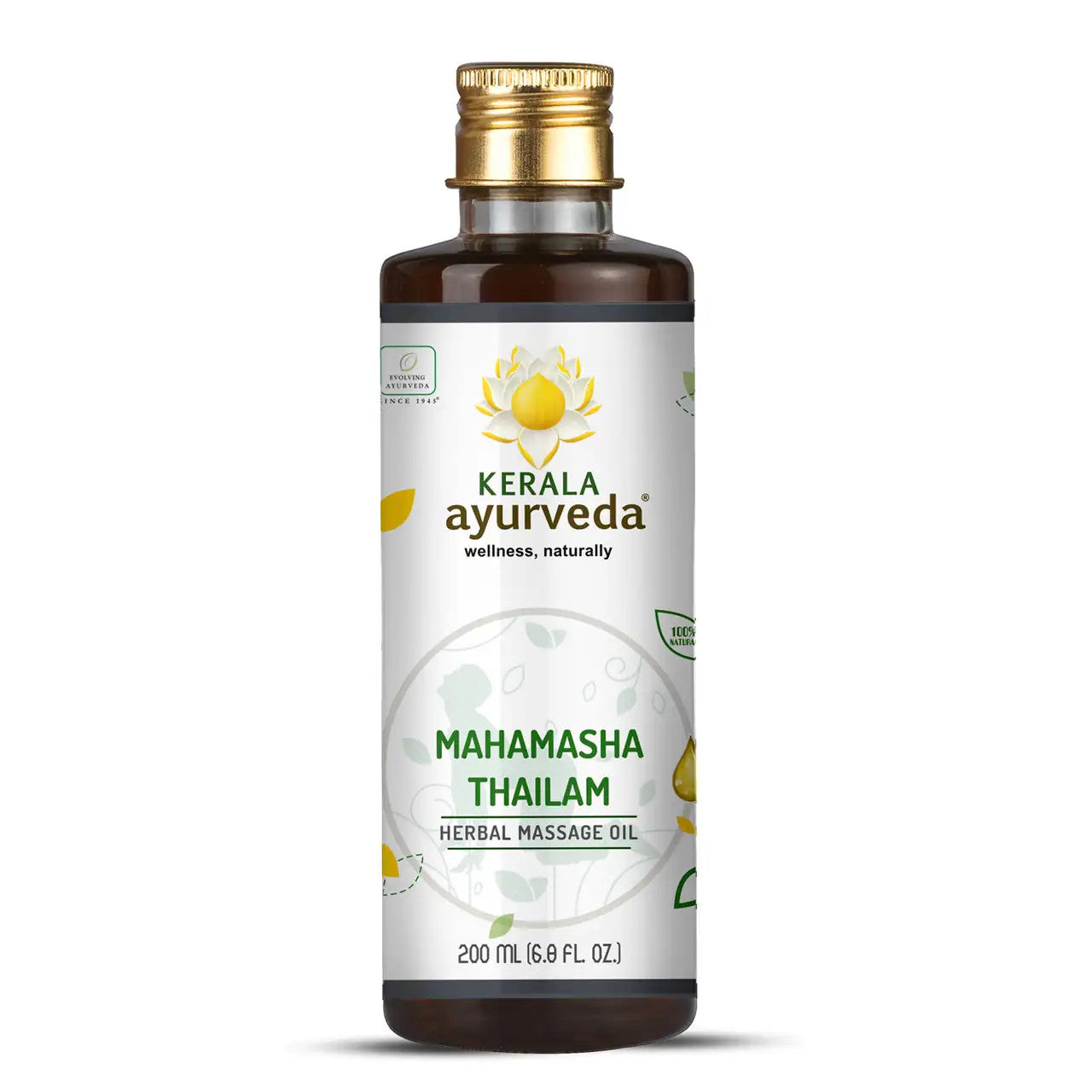
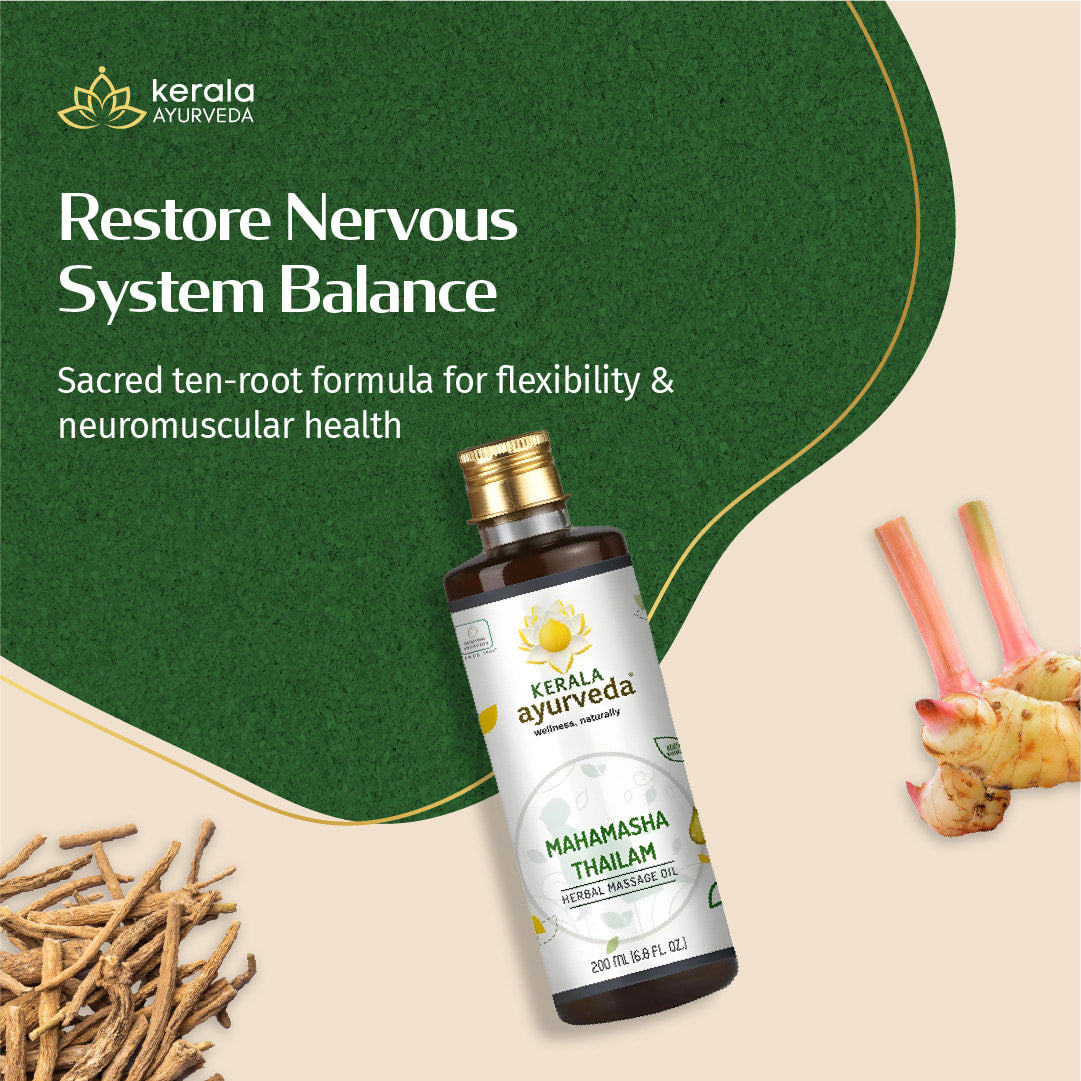
If your pain has a neurological quality such as numbness, tingling, or radiating sensation along a nerve pathway, this follows a different Ayurvedic pathway and calls for a different approach. Kerala Ayurveda's Mahamasha Thailam is specifically formulated for nerve and neuromuscular support. We encourage you to speak with your Ayurvedic practitioner if nerve pain concerns are part of your experience. Learn About Mahamasha Thailam

References
Ayurvedic Texts
- Charaka Samhita, Sutrasthana, Chapter 20 (Maharoga Adhyaya)
- Charaka Samhita, Chikitsa Sthana, Chapter 28 (Vatavyadhi Chikitsa)
- Sushruta Samhita (K.L. Bhishagratna, trans.)
- Ashtanga Hridayam (Vagbhata)
- Madhava Nidanam: Classification of Shoola types
Published Research
- Rudrappa GH, et al. Turmeric boswellia formulation for acute musculoskeletal pain: randomized placebo controlled double blind trial. Medicine (Wolters Kluwer). 2022. PMC9439841.
- Kulkarni RR, et al. Clinical evaluation of Shallaki (Boswellia serrata) in Sandhigata Vata (osteoarthritis). PubMed Central. PMC3361921.
- Boswellia serrata: Inflammation reducing effects in joint conditions. Arthritis Research and Therapy. 2018.
- Boswellia serrata for osteoarthritis: Pain reduction and improved physical function. Journal of Ethnopharmacology.
- Ashwagandha for osteoarthritis pain and stiffness: Randomized double blind clinical trial. 2015.
- Ignatius J, et al. Patient assessment and chronic pain self-management in Ayurvedic ethnomedicine. PMC7216187.
- Kumar P, et al. Vedanasthapana Mahakashaya as analgesic: A review. Journal of Ayurveda and Integrated Medical Sciences. 2023.
- Pain management in Ayurveda. International Journal of AYUSH. 2025; 14(08): 120-131.
Related Products
Dual-action advanced formula for immediate and long-term pain relief