















Highlights
The Art of Snehana: How an Ayurveda Oil Massage Becomes an Act of Self Love
What if the most powerful form of self love is not something you think or say, but something you do with your own two hands?
In Ayurveda, one of the most nourishing daily practices is Abhyanga, a warm oil massage you give yourself before bathing. But this is far more than a wellness routine. The Sanskrit word for oil is Sneha, which also means love, tenderness, and deep affection. Snehana, the act of oiling the body, carries a dual meaning: to oil oneself and to love oneself. In Ayurveda, these are one and the same.
Every stroke of warm oil across your skin is a deliberate act of nourishment, a conversation between your hands and your body that says: I see you. I care for you. You are worth this time.
What Is Abhyanga?

Abhyanga is a full body oil massage and one of the most important practices within Dinacharya (daily self care routine). The term comes from the Sanskrit root words abhi (into, toward) and anj (to anoint), sometimes translated as "toward the heart." This reflects both the physical direction of the massage strokes and the deeper emotional intention behind the practice.
Warm, herbalized oil is applied to the entire body using open palms. Strokes are long and flowing on the limbs, circular around the joints, stimulating Marma (vital energy) points throughout the body. The Ayurvedic texts explain that Vata (Air energy) dominates the tactile sensory organ residing in the skin. Because of this, Abhyanga is profoundly beneficial for balancing Vata throughout the entire body.
Why Abhyanga Feels Like Love: The Science of Touch and Oxytocin
The connection between Sneha and love is not simply poetic. Modern science reveals why self massage creates such a profound sense of warmth, stability, and emotional wellbeing.
A landmark UCLA study with 95 participants found that just 15 minutes of moderate pressure massage significantly increased oxytocin, the hormone responsible for bonding, trust, and feelings of love, while reducing ACTH (adrenocorticotropin hormone), a key stress marker.
A 2025 study in Physiology & Behavior revealed something remarkable: self-touch, not just receiving touch from another person, also increases oxytocin. This was the first study to demonstrate that natural, dynamic self-touch led to elevated oxytocin concentrations. This means your daily Abhyanga oil massage can trigger the same bonding hormone that flows during an embrace or between a mother and child.
The Health Benefits of Daily Abhyanga

Beyond its emotional and hormonal effects, the Ayurvedic texts describe an extraordinary range of wellness benefits from daily Abhyanga. According to the Ashtanga Hridayam, one of the foundational Ayurvedic texts, daily Abhyanga supports:
- Jara Hara (slows aging): Nourishes the Dhatus (body tissues) and supports youthful skin elasticity
-
Srama Hara (relieves fatigue): Rhythmic strokes release physical and mental tension
Vata Shamana (pacifies Vata): Calms the nervous system through the skin, the primary seat of Vata (Air energy) - Drusti Prasada (supports vision): Especially through Shiro Abhyanga (head massage) and its effect on Marma points
- Pusti Prasada (nourishes the body): Herbalized oils deliver nutrients through the skin to deeper tissues
- Swapna (supports sound sleep): The calming effect on the nervous system eases the body into restorative rest
- Twak Dardya (skin firmness and glow): Oil strengthens the skin, improves complexion, and reduces dryness
The Charaka Samhita, another cornerstone Ayurvedic text, confirms: "The body of one who uses oil massage regularly does not become affected much, even if subjected to accidental injuries or strenuous work. By using oil massage daily, a person is endowed with pleasant touch, trimmed body parts, and becomes strong, charming, and least affected by old age." A pilot study echoes this wisdom, finding that healthy adults who received a one hour Abhyanga showed reduced heart rate, lower blood pressure, and decreased stress scores.
How Oil Reaches the Deepest Tissues
Sneha is described in Ayurveda as Sukshma (subtle), allowing it to pass through the minutest channels and reach the deep layers of tissue.
According to Dalhana, a renowned commentator on the Sushruta Samhita (one of the oldest Ayurvedic texts on wellness and the body), oil applied through massage reaches the hair follicles within about 300 Matras (roughly 95 seconds). From there, it progressively permeates into Rakta (blood), Mamsa (muscle), Meda (fat), and Asthi (bone) tissues. At 900 Matras (approximately 280 seconds), it reaches Majja Dhatu (bone marrow and nerve tissue). So this means a self massage with herbal oil that lasts 10 to 20 minutes is sufficient to receive therapeutic results.
Nabhi Purana: Nourishing the Body By Oiling the Navel

Of the 107 Marma points mapped in Ayurveda, one holds extraordinary significance: Nabhi Marma, the navel center.
The Sushruta Samhita states: "All the channels of the body converge at the navel. Therefore, addressing the navel properly can support the alleviation of many imbalances." This is not poetic exaggeration. The navel is the very first point of connection between mother and child. Before birth, every nutrient flows through this single point. Even after the umbilical cord is cut, the navel remains one of the body's most vital energy hubs.
Why Nabhi Marma Is So Powerful
The navel is classified as a Sadyopranhar Marma, meaning it is essential for sustaining life. Several factors make it uniquely important:
- 72,000 Nadis (energy channels) originate from and converge at the Nabhi, making it the central distribution point for Prana (vital life force) throughout the body
- The thinnest skin on the body surrounds the navel. With no subcutaneous fat layer between the outer skin and the inner vagus nerve, stimulation of this area directly influences the nervous system
- Agni Sthana (seat of digestive fire) and Jyoti Sthana (site of the flame): The Sushruta Samhita identifies Nabhi as the luminous center of Agni (digestive fire) in the abdominal region. Many Acharyas (revered teachers) use these two terms to describe the same quality of the navel: it is both the seat of digestive fire and the site of the body's inner flame. Grahani (the duodenum), where Jatharagni (the body's primary digestive fire) physically transforms food, sits just above the navel. With its vast network of Nadis and nerves converging at this single point, the Nabhi is where the energy of digestion originates and radiates outward to the rest of the body
- Sira Mula (root of the blood vessels) is another name for Nabhi in the Ayurvedic texts, reflecting its foundational role in the circulatory network rooted in its original function during fetal development
The navel is also directly linked to the enteric nervous system, often called the "second brain." Stimulating the Nabhi area activates the vagus nerve, the primary channel of communication between the gut and the brain. This is one reason navel oiling produces such a profound sense of calm.
Nabhi Purana: The Practice of Navel Oiling
Nabhi Purana (also known as navel oiling) is a simple yet powerful Ayurvedic practice. Warm, herbalized oil is applied to the navel pit and gently massaged in a clockwise direction, allowing it to absorb through the thin skin and nourish the organs, tissues, and energy channels connected to this vital Marma point.
According to Dr. Raghuram Y.S., an Ayurvedic practitioner with extensive clinical experience, Nabhi Purana primarily balances Vata (Air energy) and Pitta (Fire energy), especially Apana Vayu (downward moving energy governing elimination and reproduction) and Samana Vayu (energy governing digestion and assimilation).
Key wellness benefits of Nabhi Purana include:
- Digestive support: Eases constipation, bloating, and abdominal discomfort by stimulating Agni and correcting imbalances of Samana Vayu
- Nervous system nourishment: Calms the mind and reduces stress through vagus nerve stimulation, promoting parasympathetic ("rest and digest") activity
- Reproductive and menstrual support: Helps ease menstrual discomfort by balancing Apana Vayu in the pelvic region
- Vata and Pitta pacification: Grounds restless Vata energy and soothes excess Pitta, supporting emotional and physical equilibrium
How to Practice Nabhi Purana at Home
Nabhi Purana is a beautiful complement to your Abhyanga practice. Add it during your self massage or practice it on its own before bed.
- Lie down comfortably on your back
- Place 3 to 5 drops of warm oil into the navel pit
- Using the ring finger, gently massage in slow, clockwise circles around the navel for 60 to 90 seconds
- Allow the oil to absorb for 10 to 15 minutes while resting quietly
- For Vata (Air energy) imbalances, sesame oil is recommended. For Pitta (Fire energy) conditions, use ghee or coconut oil. For Kapha (Water energy) imbalances, mustard oil is appropriate
For a deeper therapeutic experience, a practitioner may perform Nabhi Basti, where a small dough dam ring is placed around the navel as a container to hold the warm herbalized oil in place for 15 to 20 minutes. This allows for prolonged absorption and deeper nourishment of the abdominal organs and energy channels.
Three More Key Areas That Deserve Extra Attention

While Sarvanga Abhyanga (full body massage) is ideal, Ayurveda emphasizes three areas that should never be skipped, even on busy days:
- Shiro Abhyanga (head massage): The head is the most important area for Abhyanga. Regular scalp massage helps prevent headaches, supports healthy hair, and promotes sound sleep. The Ayurvedic texts teach that the Indriyas (sense organs) are closely connected to the mind, and oiling the head supports both mental clarity and sensory health.
- Karna Abhyanga (ear massage): Gentle application of oil to the outer ears nourishes the delicate tissues and is traditionally used to support balance and calm.
- Pada Abhyanga (foot massage): The feet contain over 7,000 nerve endings and numerous Marma points. Foot massage removes dryness, provides strength and stability, and supports healthy stress responses. Research shows hand administered foot massage increases plasma oxytocin levels, activating brain regions tied to reward and connection.
Choosing Your Abhyanga Oil

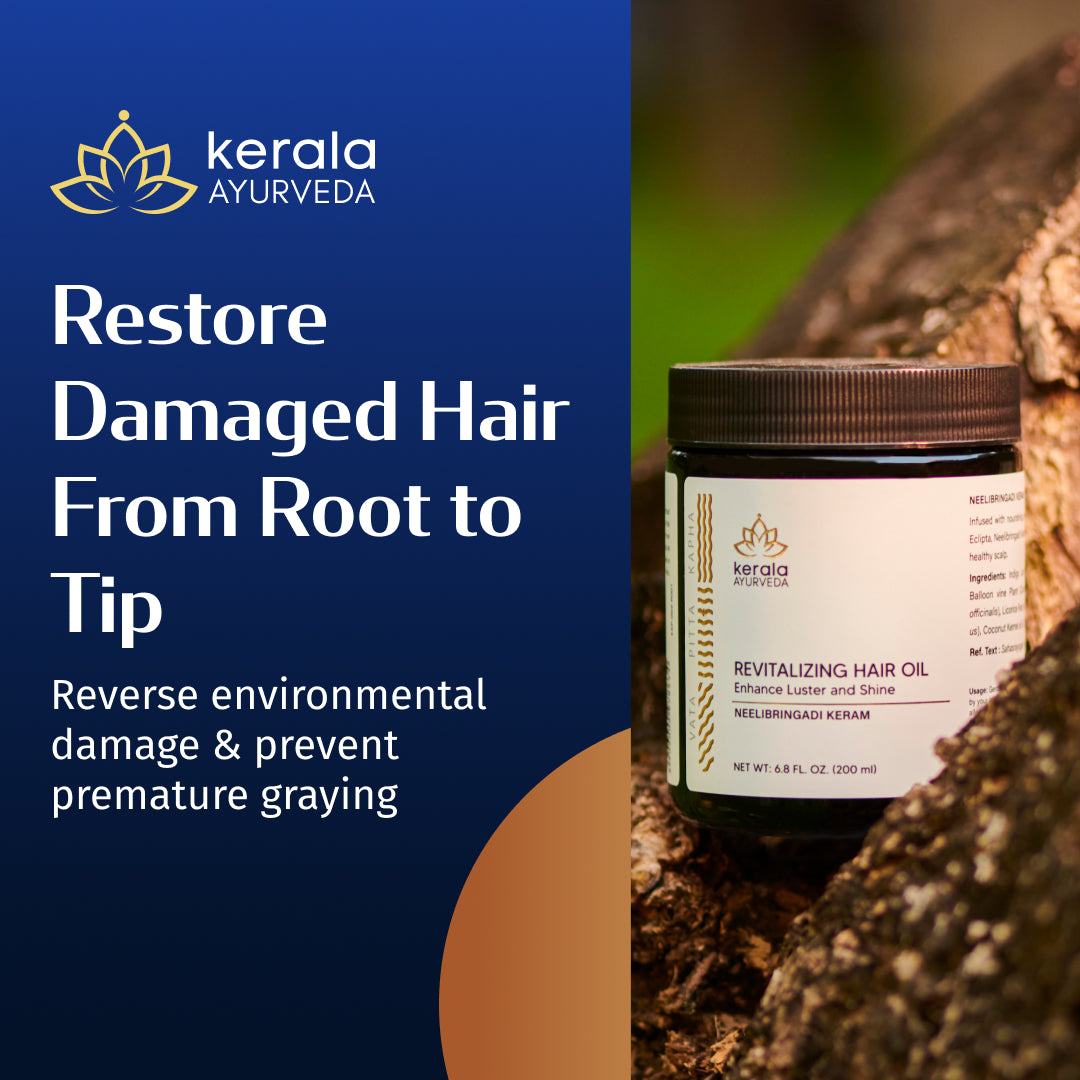
Ayurveda teaches that the oil you select should match your Prakriti (body constitution), the current season, and your wellness needs. While Tila Taila (sesame oil) is the best universal choice because it is Tridoshic (balancing to all three Doshas), herbalized oils deliver targeted benefits that plain oil cannot.
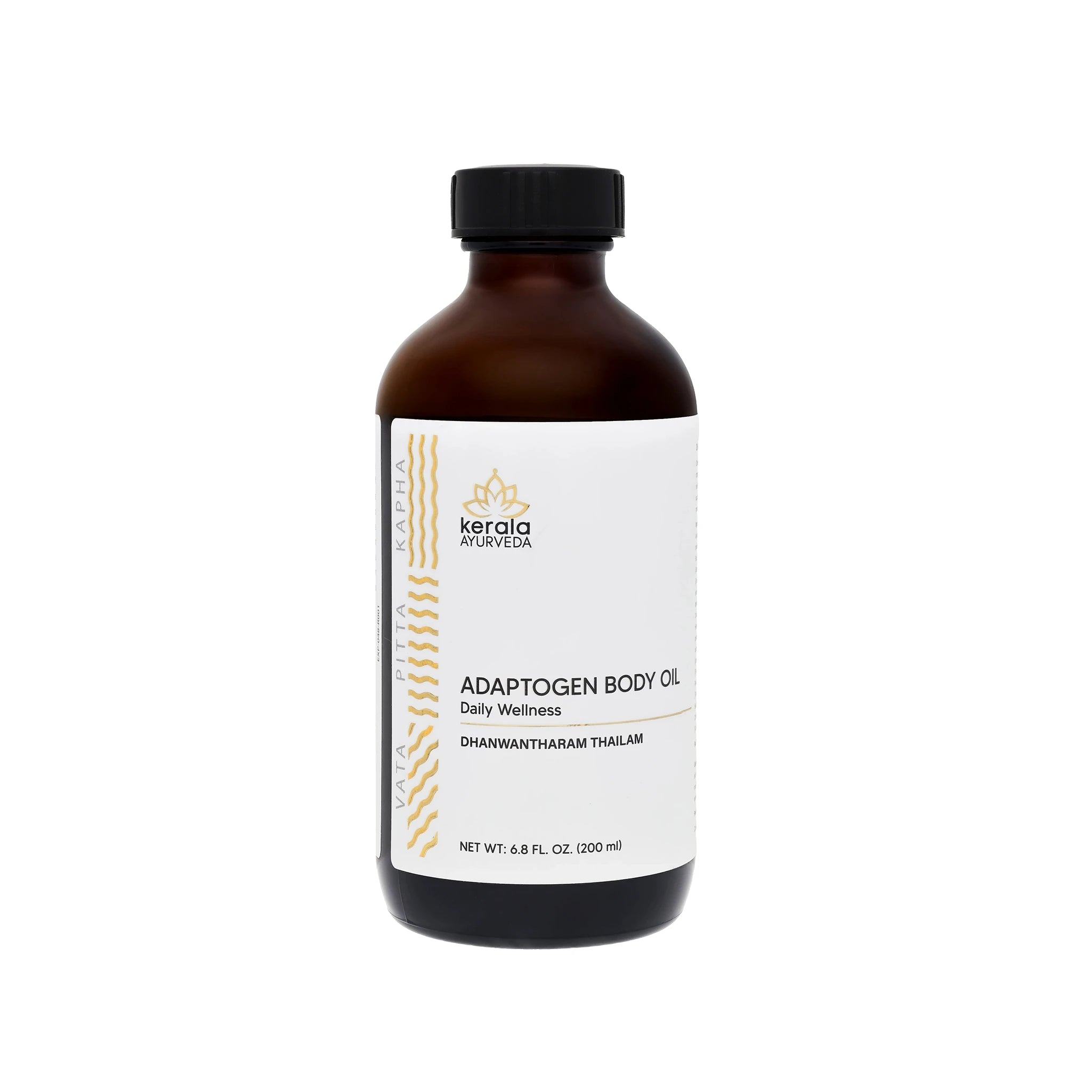
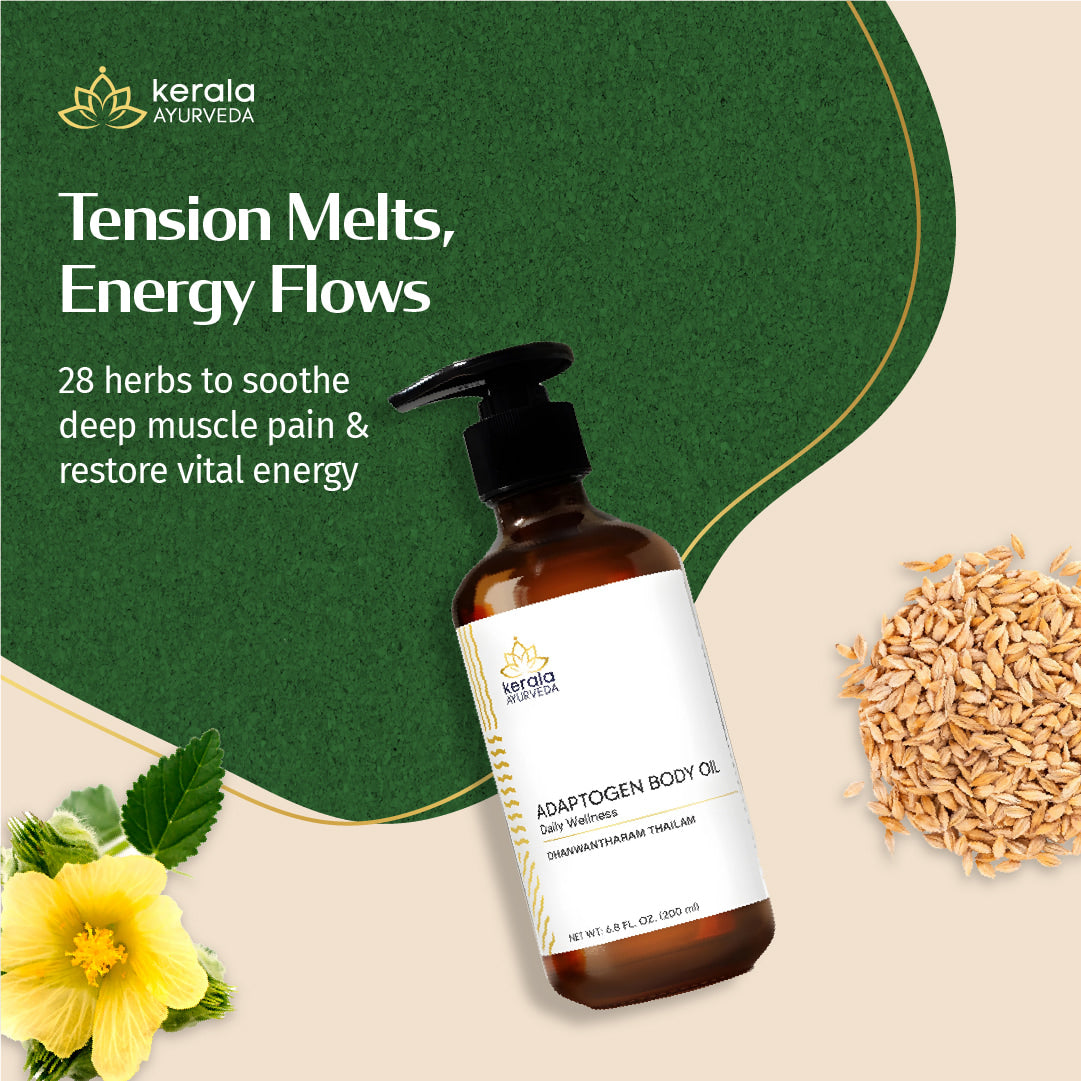
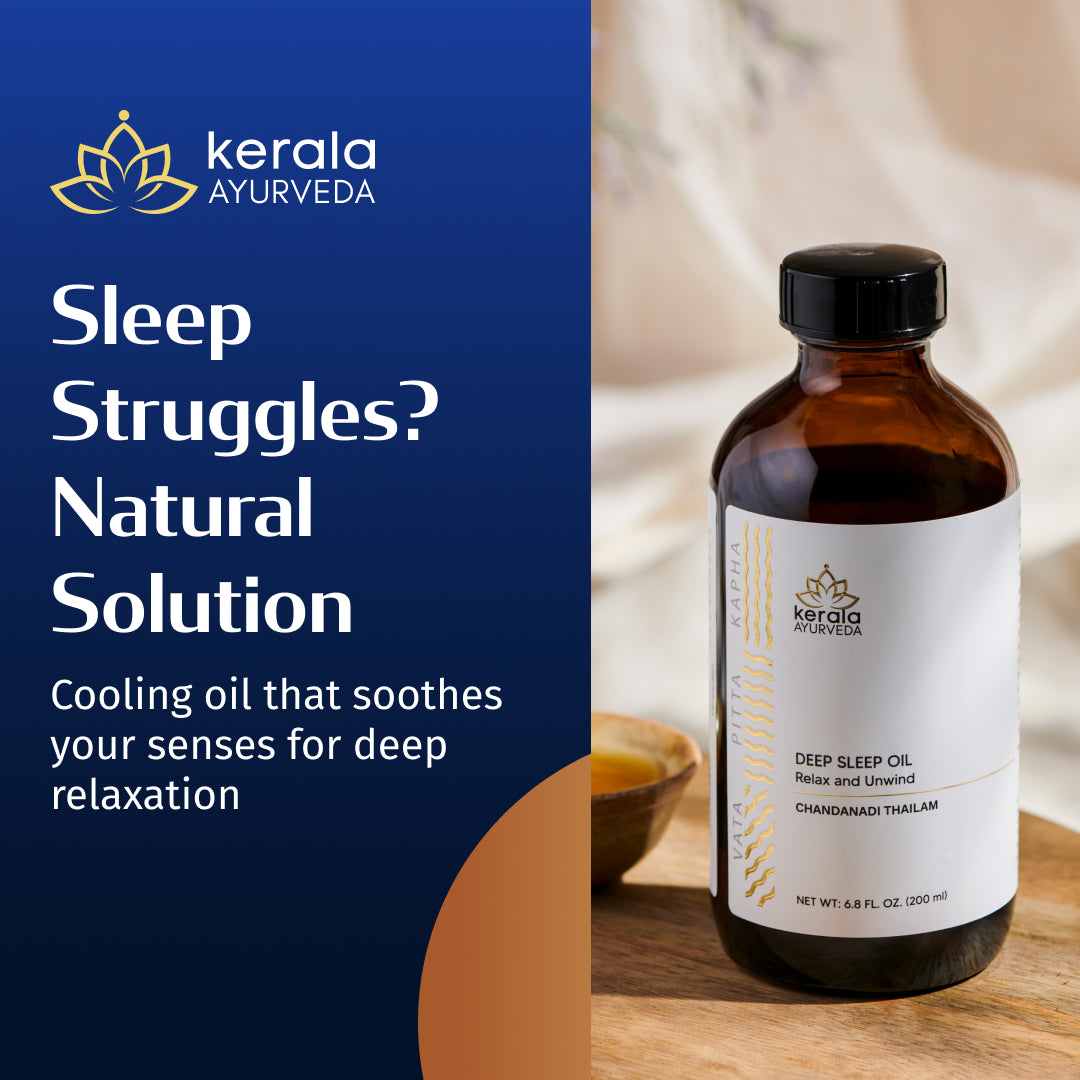
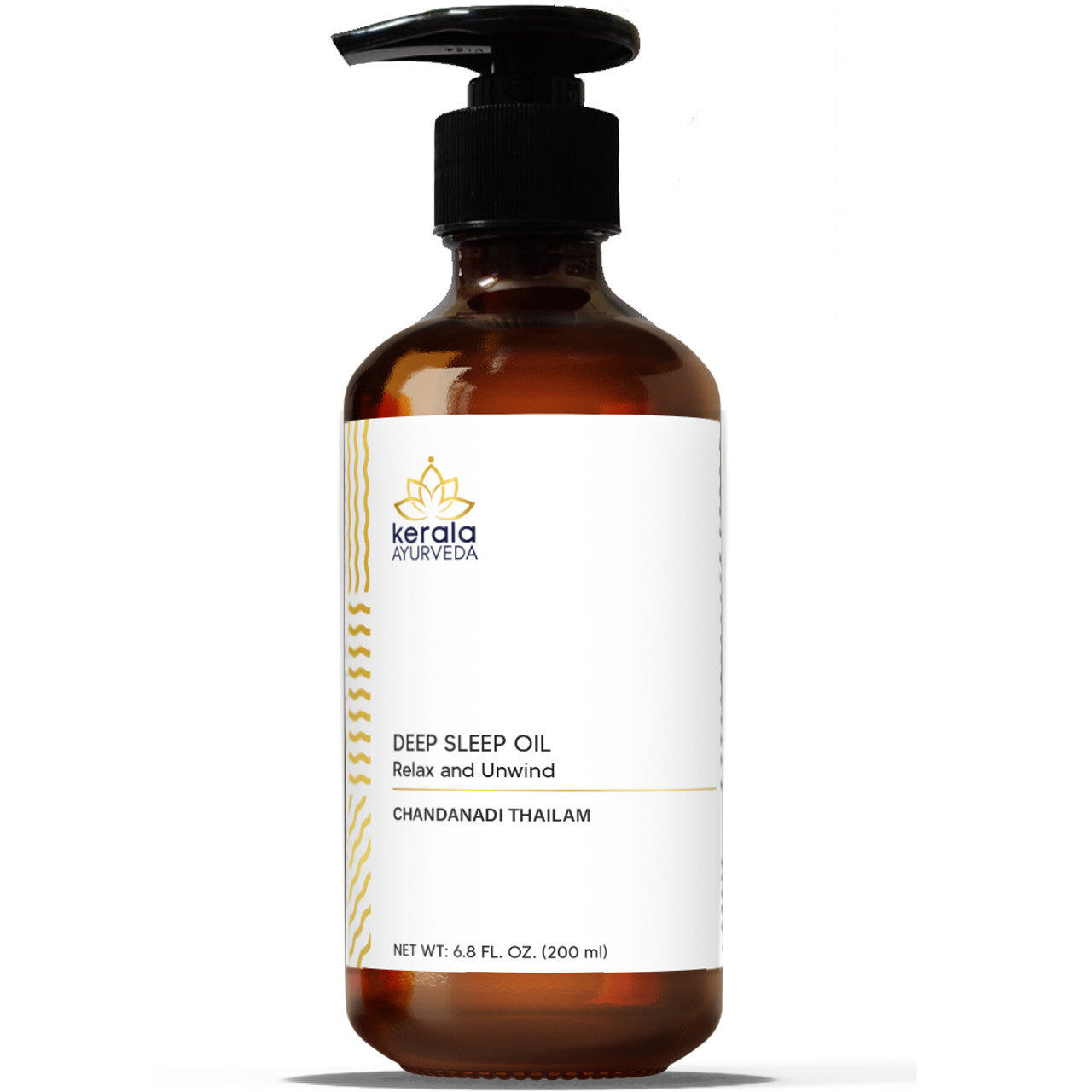
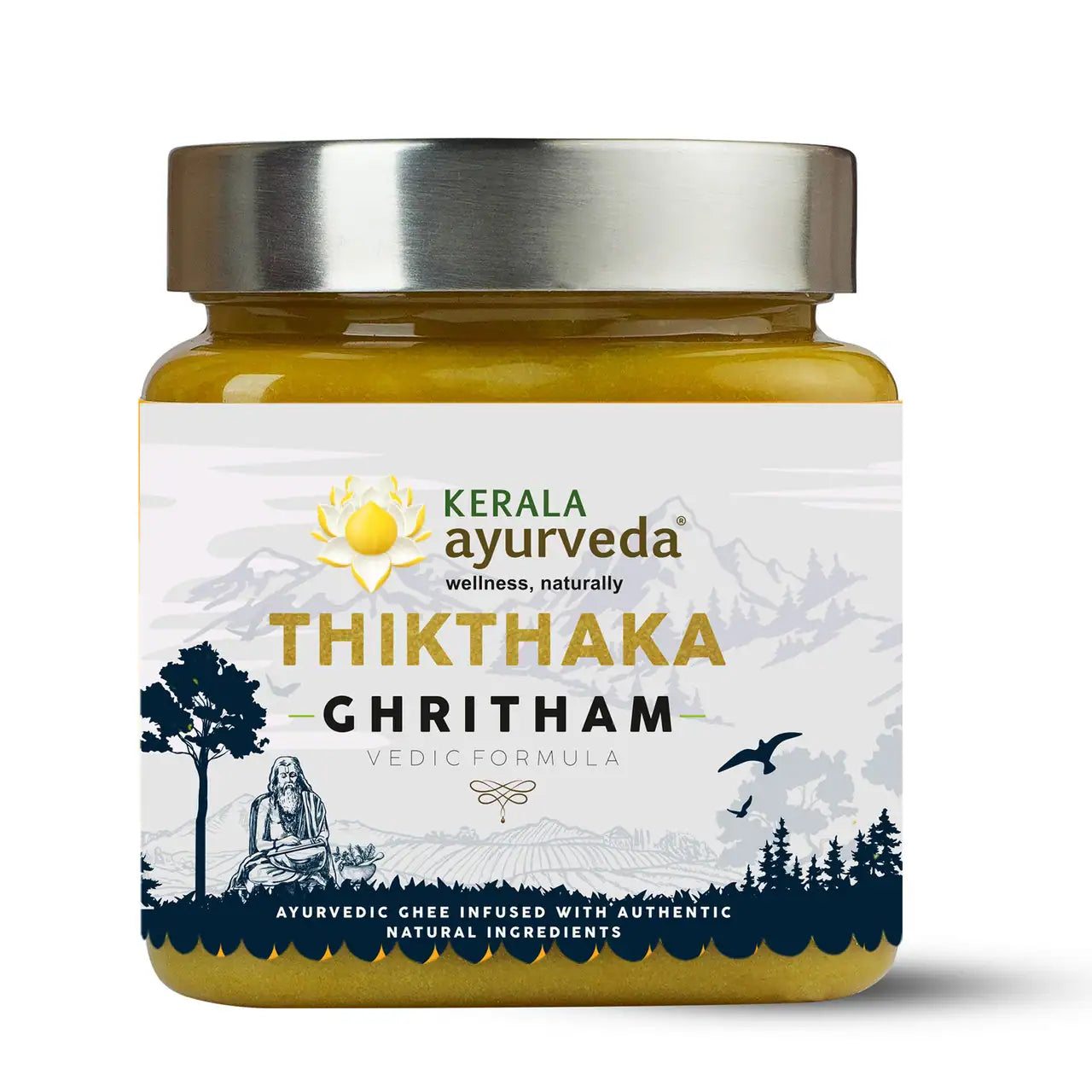
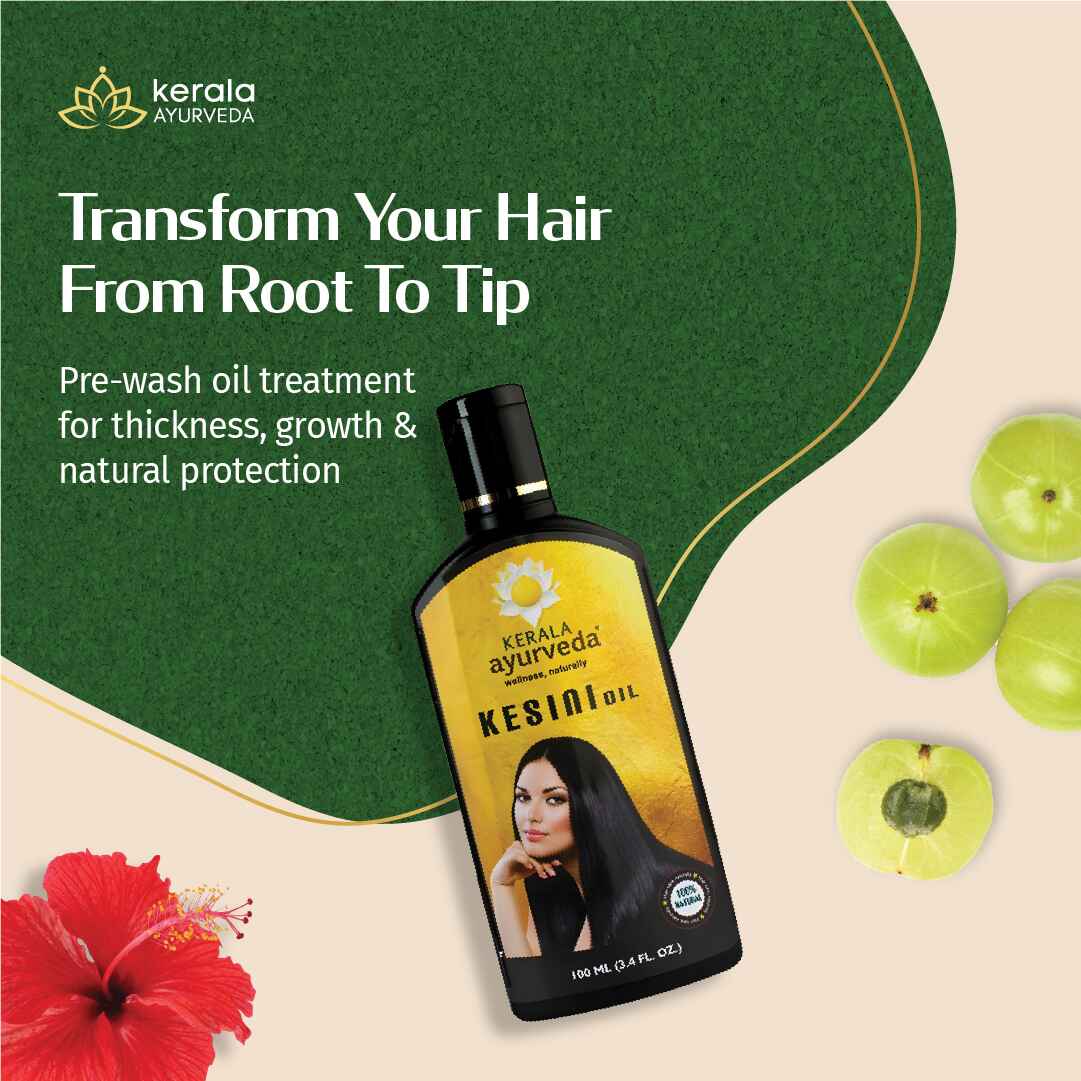
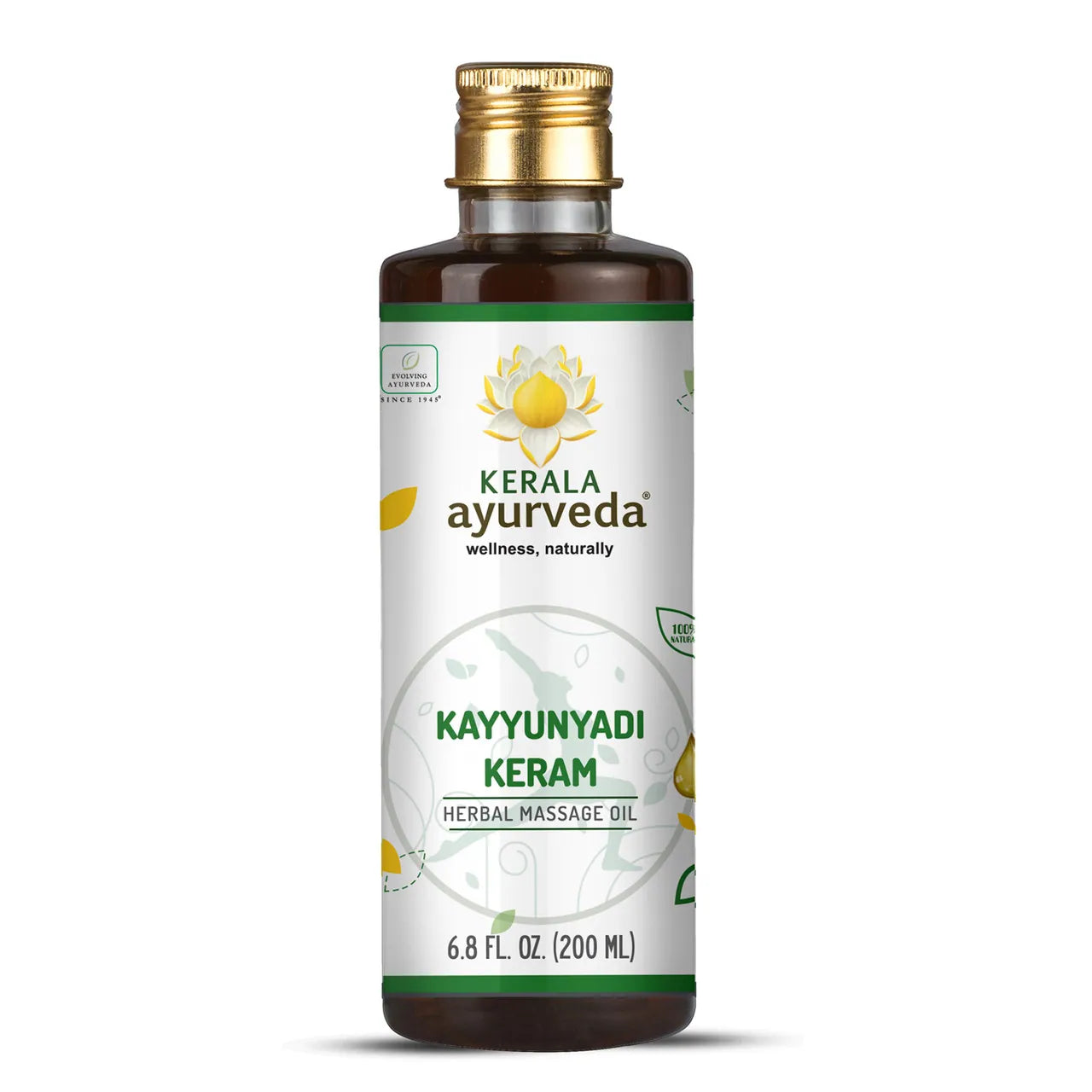
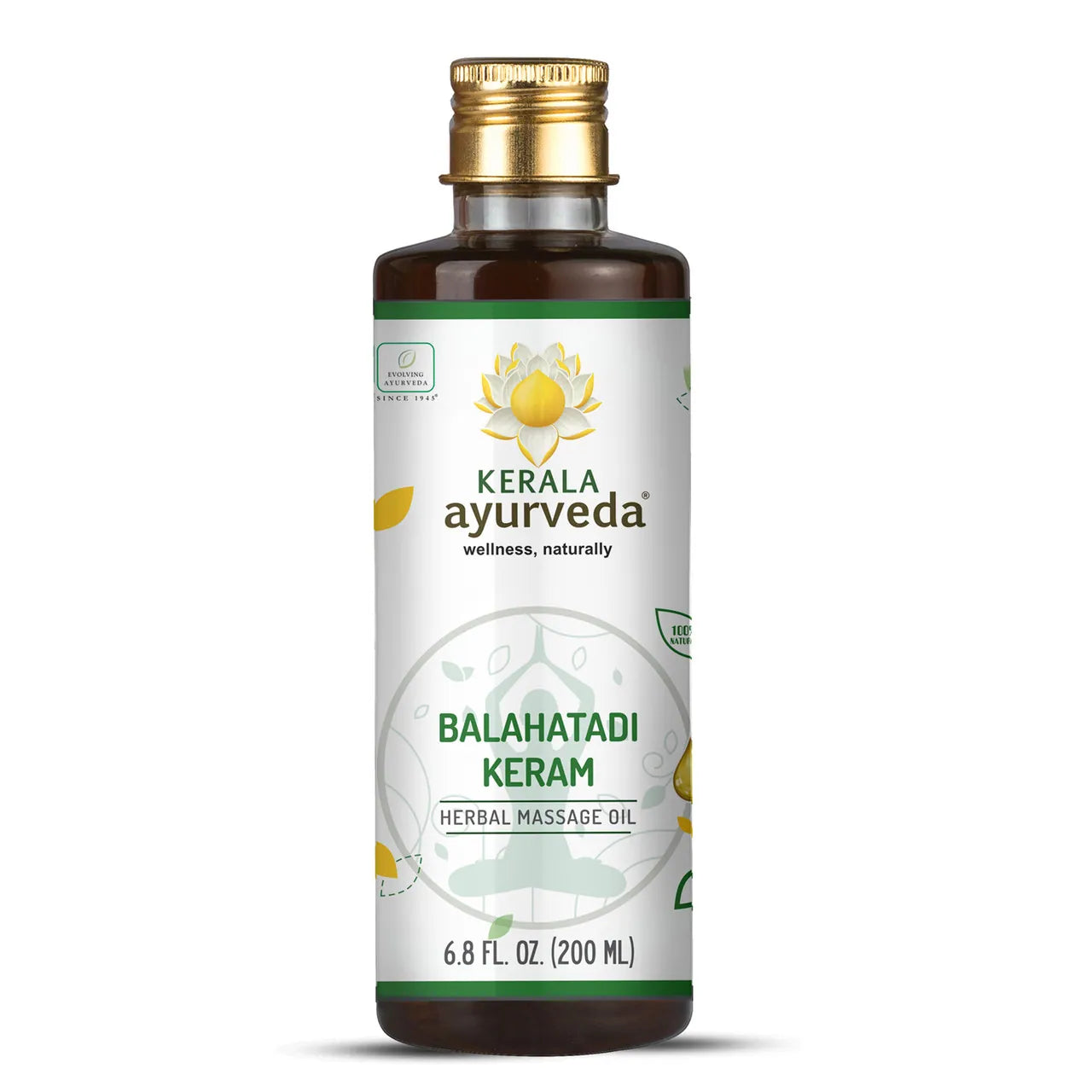
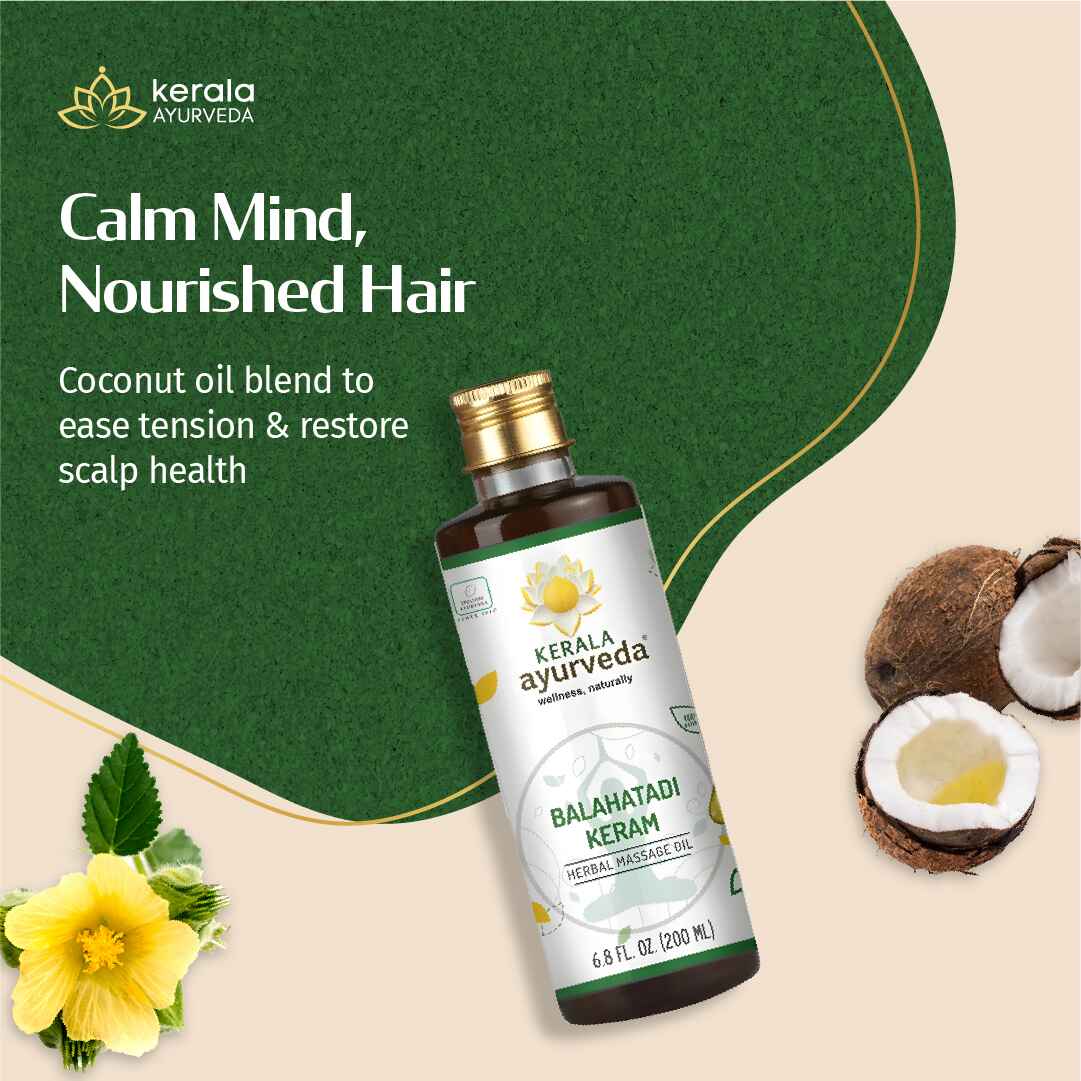
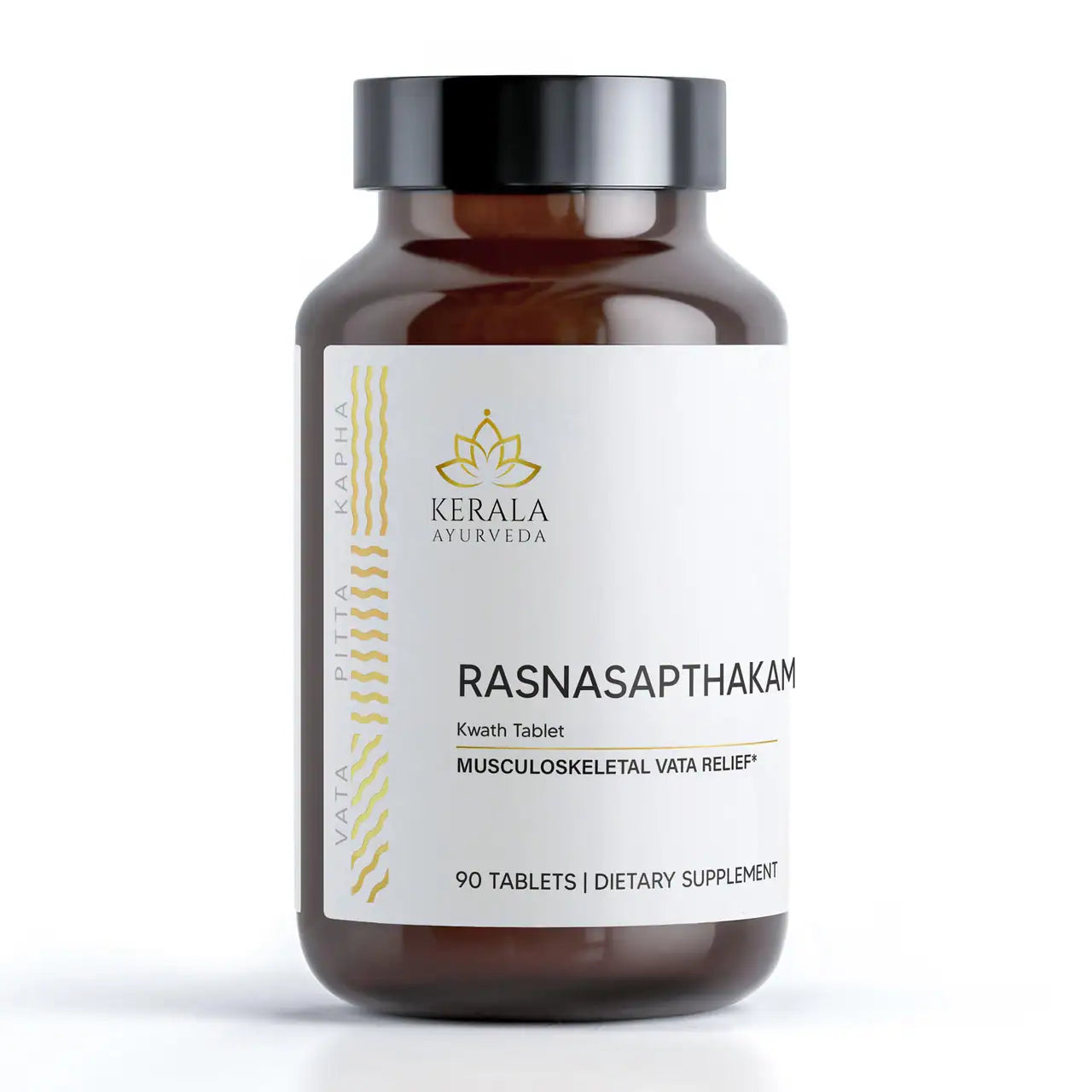
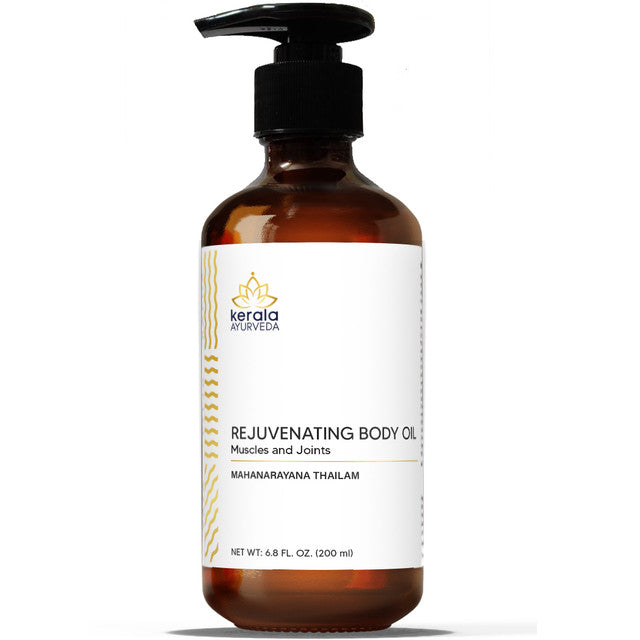
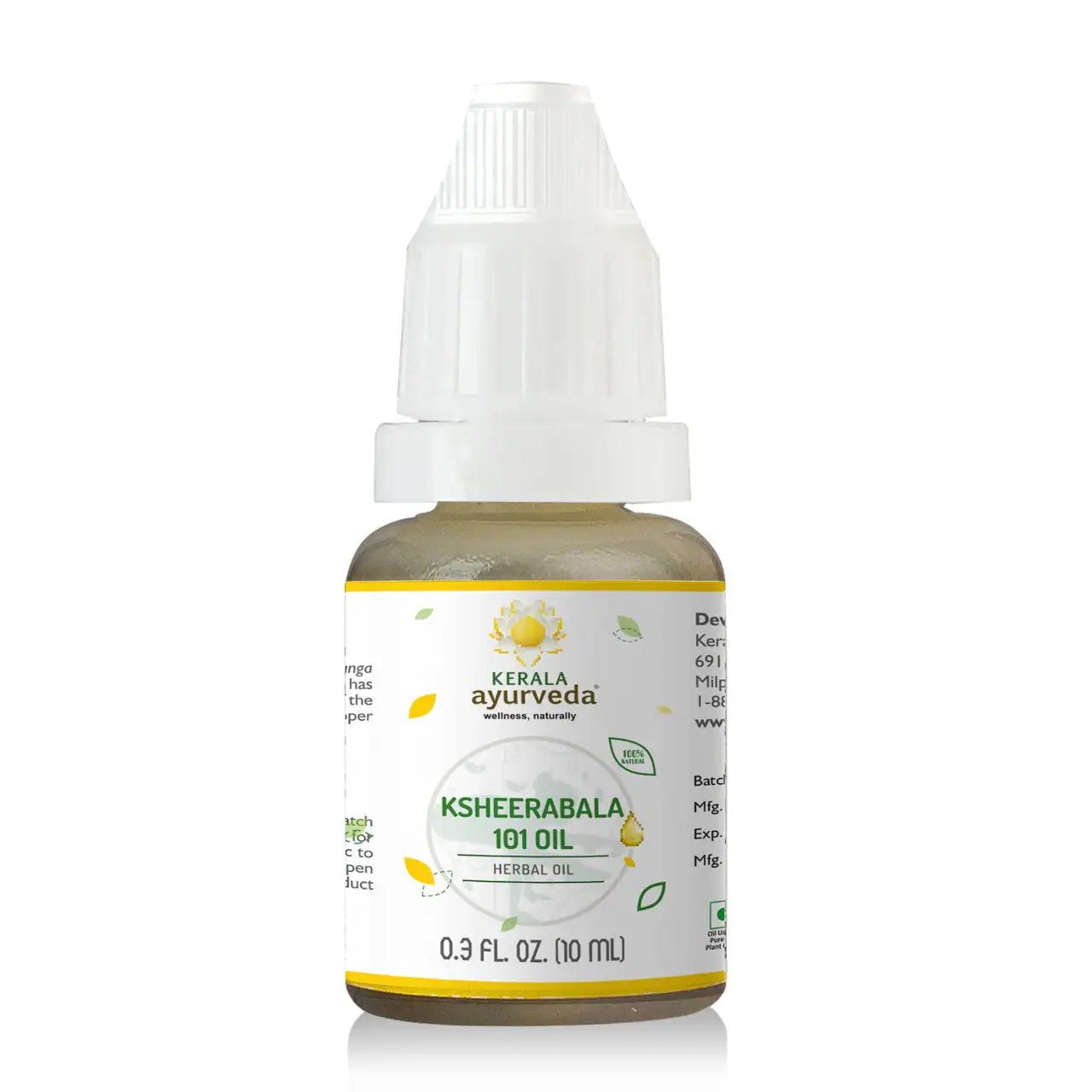
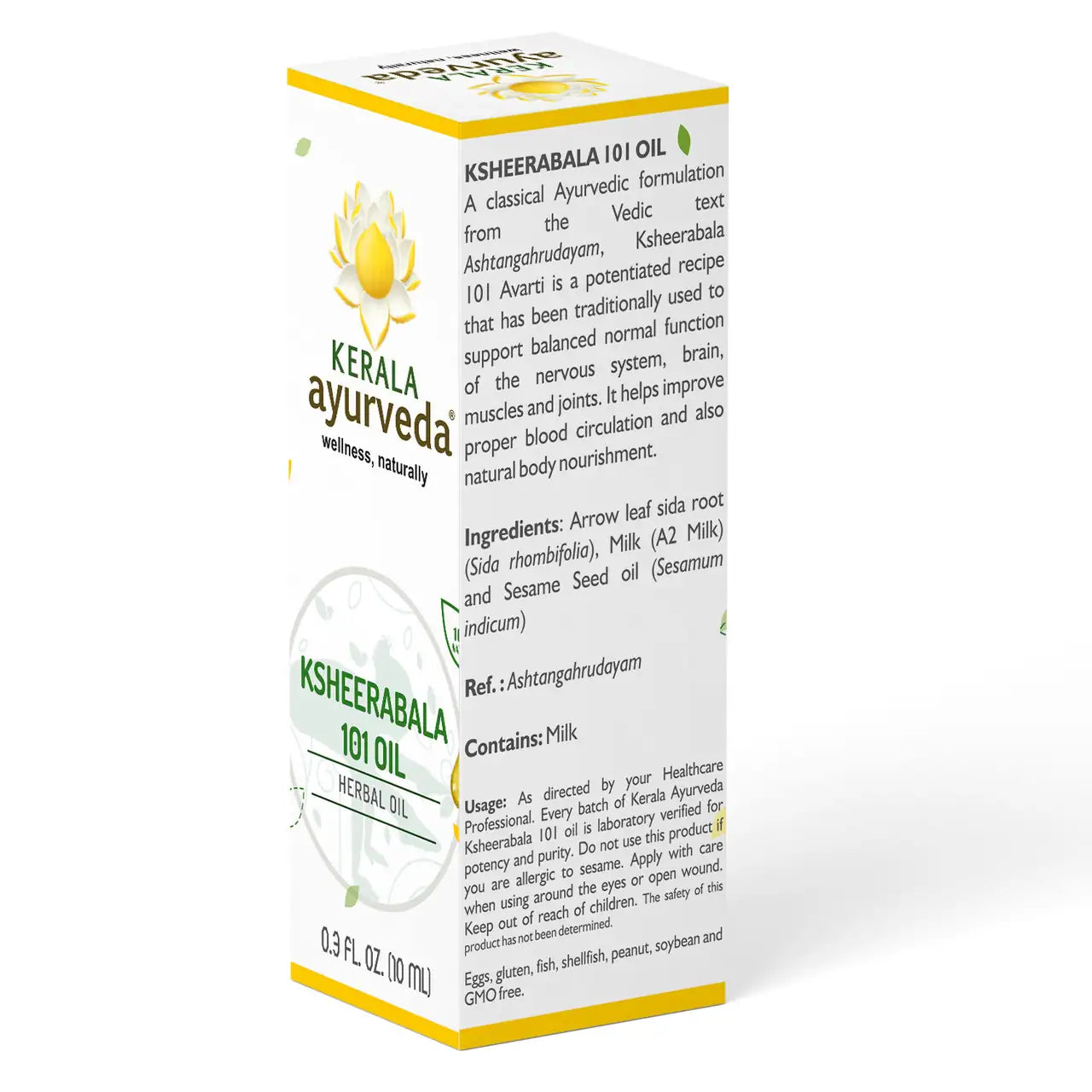
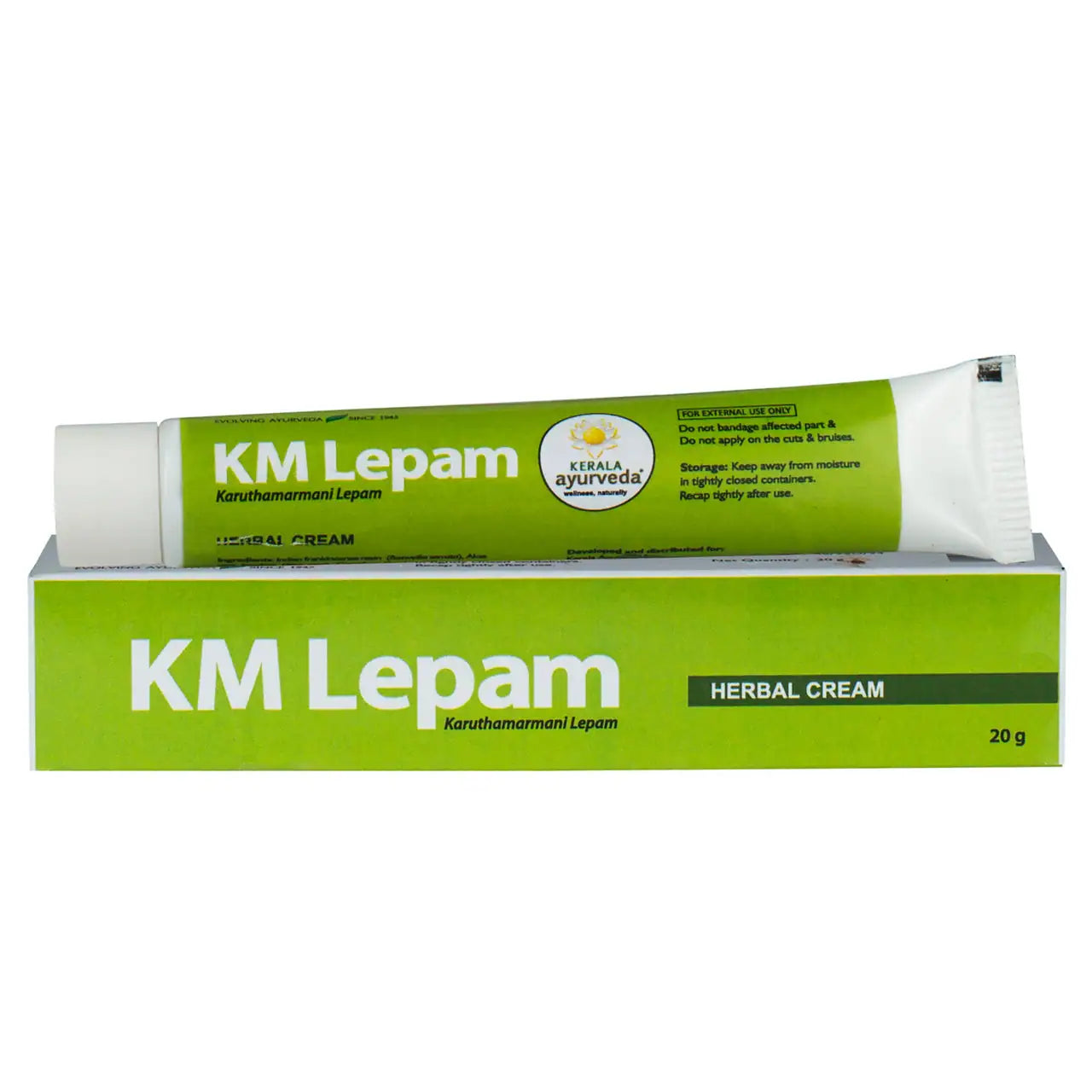
Here are three Kerala Ayurveda oils to begin your self love Abhyanga ritual:
|
Wellness Need |
Recommended Oil |
Key Benefits |
Dosha Support |
|
Easing tension and body aches |
28 full spectrum herbs soothe pressure in joints and muscles. Supports relaxation, grounding, and flexibility. |
Vata (Air energy) |
|
|
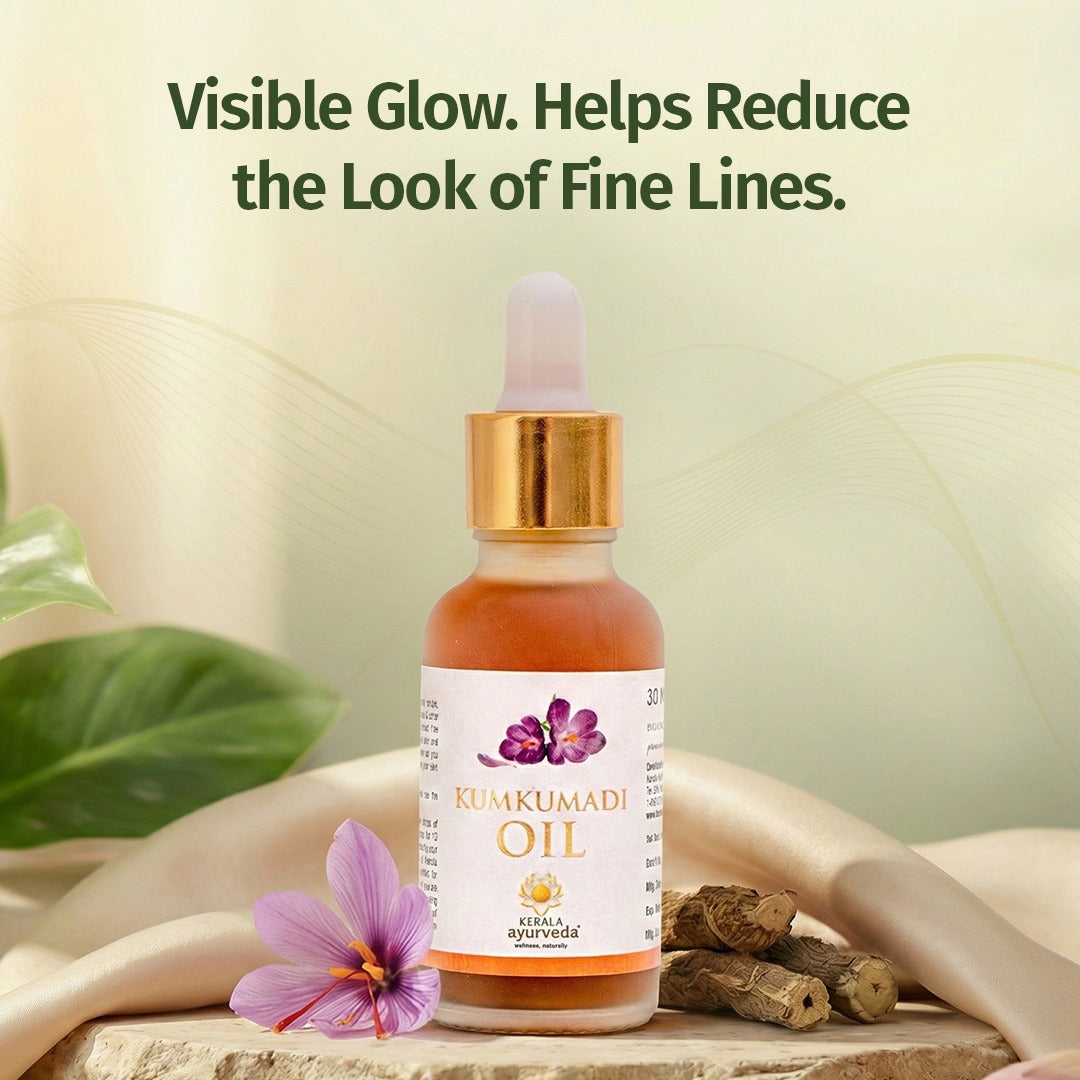
Improving skin complexion |
Frankincense, Saffron, and Cinnamon brighten skin and lessen the appearance of fine lines and blemishes. |
Vata and Kapha (Air and Water energy) |
|
|
Supporting restful sleep |
Cooling oil with Sandalwood, Ashwagandha, and Himalayan Cedar soothes the senses into a naturally relaxed state. |
Pitta and Kapha (Fire and Water energy) |
These are just three of many Ayurvedic massage oils available. Browse the full massage oil collection to find the perfect match for your constitution.
How to Perform Self Abhyanga: A Step by Step Guide

Set aside 10 to 20 minutes, ideally in the morning before bathing. Warm your chosen oil by placing the bottle in a bowl of hot water for a few minutes.
- Begin with stillness. Take a moment to quiet your mind. Set an intention of care and gratitude for your body. Remember, this is Sneha. This is love.
- Start with the head. Place warm oil on your fingertips and palms. Massage the scalp vigorously using the open part of your hands. Spend generous time here, as the head is the most important area of Abhyanga.
- Face and ears. Gently apply oil to your face and the outer part of your ears. These areas do not need vigorous pressure.
- Neck and shoulders. Use the flat surfaces of your open palms to work the front and back of the neck and upper back.
- Arms, hands, and fingers. Use long strokes on the long bones, always moving toward the heart. Use circular motions around the elbow and wrist joints.
- Chest and abdomen. Apply oil gently over the chest. Use broad, clockwise circular movements over the abdomen. Place a few extra drops of oil directly in the navel as part of your Nabhi Purana practice (see above).
- Back and spine. Massage what you can comfortably reach with vigorous upward strokes moving toward the heart.
- Legs and feet. Use long strokes on the thigh and calf bones, directing movements upward toward the heart. Use circular motions around knees and ankles. Finish with extra time on the soles of the feet, the second most important area after the head.
- Rest for 10 to 15 minutes. Allow the oil to absorb. The warmth of the bath will drive the oil deeper into the tissues.
- Bathe with lukewarm water. Use minimal soap to preserve the nourishing layer of oil on the skin. Dress warmly.
When to Avoid Abhyanga
Abhyanga is broadly supportive, but Ayurveda identifies conditions where it should be avoided: during active Kapha (Water energy) aggravation, fever, indigestion, immediately after purgation therapy, and during pregnancy (unless under the guidance of a qualified Ayurvedic practitioner).
Begin Your Sneha Practice Today

There is perhaps no greater expression of self love than lovingly anointing yourself from head to toe with warm oil. Abhyanga gives you something rare in modern life: a daily opportunity to slow down, place your hands on your own body, and offer it the same tenderness you would give to someone you deeply cherish.
The effects of Abhyanga are said to be similar to the effects of being saturated with love. Both bring a deep feeling of stability, warmth, and comfort. When you practice with full attention, your body responds. Oxytocin flows. Your nervous system settles, skin glows, sleep deepens and tension dissolves.
This is the gift of Sneha. Oil and love. Nourishment that goes far beyond the surface.
You are worth this kind of care. Every single day.

References
- Vagbhata, Ashtanga Hridayam, Vol. I, Srikanta Murthy KR, editor, 2nd ed., Krishnadas Academy, Varanasi, 1994; Su 2/8.
- Charaka Samhita, R.K. Sharma and Bhagwan Dash, Reprint Edition, Chaukhamba Sanskrit Series Office, Varanasi, 2011; Ch. Su. 5/85, 87-89.
- Dalhana, Commentary on Sushruta Samhita, Chikitsasthana, Chapter 24, Verse 30-34, Chowkhamba Krishnadas Academy, Varanasi, 2004.
- Lekshmi R.S. and Waheeda Banu, "Abhyanga as a Dinacharya: A Scientific Review," Journal of Ayurveda and Holistic Medicine, 2018; 6(2): 25-31.
- Anand Agarwal et al., "A Review Study on Role of Abhyanga in Dincharya," World Journal of Pharmaceutical Research, 2021; 10(5): 1774-1780.
- Morhenn V., Beavin L.E., Zak P.J., "Massage Increases Oxytocin and Reduces Adrenocorticotropin Hormone in Humans," Alternative Therapies in Health and Medicine, 2012; 18(6): 11-18.
- de Jong T.R. et al., "Effects of Self-Touch and Social-Touch on Peripheral Oxytocin Concentrations," Physiology & Behavior, 2025.
- Uvnäs-Moberg K. et al., "Self-Soothing Behaviors with Particular Reference to Oxytocin Release Induced by Non-Noxious Sensory Stimulation," Frontiers in Psychology, 2014; 5: 1529.
- Li Q. et al., "Foot Massage Evokes Oxytocin Release and Activation of Orbitofrontal Cortex and Superior Temporal Sulcus," Psychoneuroendocrinology, 2019.
- Basler, A.J., "Pilot study investigating the effects of Ayurvedic massage on subjective stress experience," Journal of Alternative and Complementary Health, May 2011.
- Dr Raghuram Y.S. and Dr Manasa, "Nabhi Purana Treatment Method: Procedure, Benefits," EasyAyurveda.com.
- Dr Raghuram Y.S. and Dr Manasa, "Nabhi Marma: Components, Location, Effect of Injury," EasyAyurveda.com.
- Dr Raghuram Y.S. and Dr Manasa, "Nabhi Chikitsa: Navel Treatment, Types, Method, Benefits," EasyAyurveda.com.
- Optimizing Gut Health: The Role of Nabhi Marma (Navel Vital Point) Stimulation in Contemporary Wellness, ResearchGate, October 2024.
- Sushruta Samhita, Sharira Sthana 4/57, Chaukhambha Orientalia, Varanasi, 2005.
- Ankita Chitragupt and Bibha Rani Ratna, "Nabhi Shareer w.s.r. to Nabhi as Pitta Sthana: A Review," Journal of Ayurveda and Integrated Medical Sciences, 2023; 8(6): 86-90.
- Gakhar M. and Sharma S., "Role of Nabhi in Fetal Development w.s.r. Nabhistu Jyoti Sthanam," International Ayurvedic Medical Journal, July 2023.